
Short answer: These fall theme preschool activities arrive with harvest season, when the play is already ripe: roll pumpkins, print with apples, scoop seeds and count the crop — fifteen pumpkin, apple and leaf ideas here fill a full theme week for ages 3–5.
Quick facts
- Ages: 3–5 years
- Theme week: 3–7 days — one theme, dipped into a little each day
- Cost: free — ordinary household things, one small pumpkin and a few apples
- Screen-free: yes — every activity on this page
- Theme: fall theme — pumpkins, apples, harvest and falling leaves
Move and play
Fall is a working season — crops are gathered, baskets are carried, and everything round seems to roll. This first set borrows all of that busy harvest energy, and it is the part of the week that burns off the wiggles.
1. Pumpkin roll relay
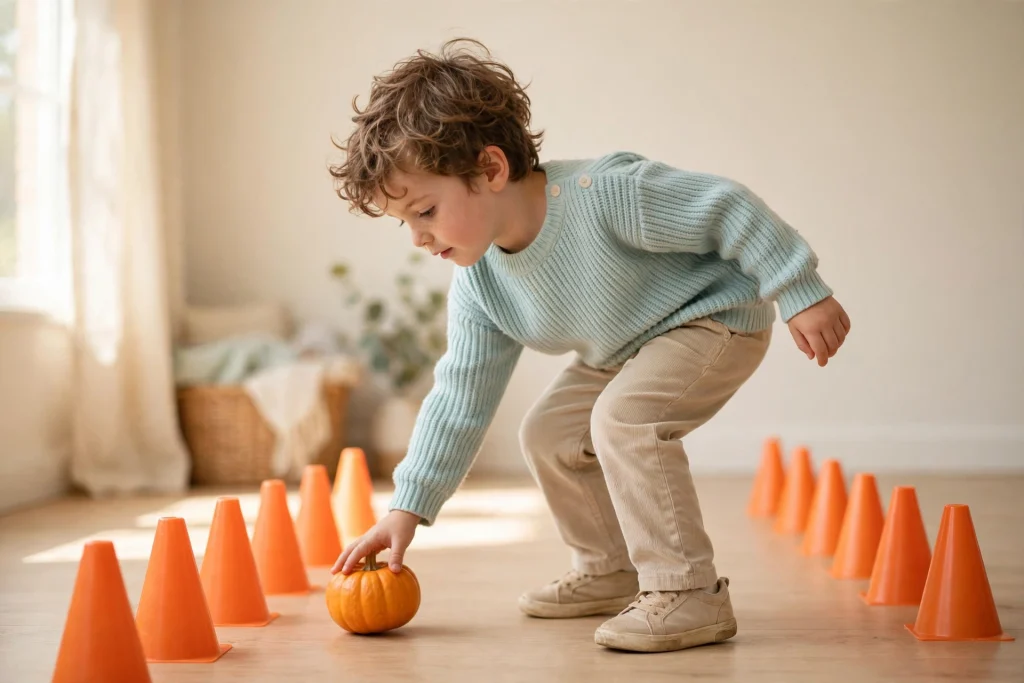
Set out a winding path of cones (cups, bottles or cushions all work) across the floor or garden, and give your child a small pumpkin to roll — two hands, guiding it around every cone to the “barn” basket at the end. A spare orange ball is the practice pumpkin for the youngest rollers. Rolling a lopsided pumpkin is harder and funnier than rolling a ball: it wobbles, veers and must be steered, which is hand-eye control and patience in one giggly package. Keep the pumpkin small enough for little hands, and if it splits after a heroic collision, it simply becomes the scooping pumpkin for activity 13 a few days early.
2. Apple orchard dash
Tape red paper apples to a wall, a door or a real tree — the “orchard” — each with a number or a letter on it. Call one out (“pick apple 4!”) and your picker dashes to the tree, pulls that apple down and carries it back to the harvest basket. Then swap: your child calls, you pick — slowly and wrongly, for maximum correction joy. Running on a mission, searching for the called number and remembering it all the way to the tree is listening, memory and early number work at speed. Paper apples only: real ones bruise, and the orchard restocks forever.
3. Leaf-pile jump
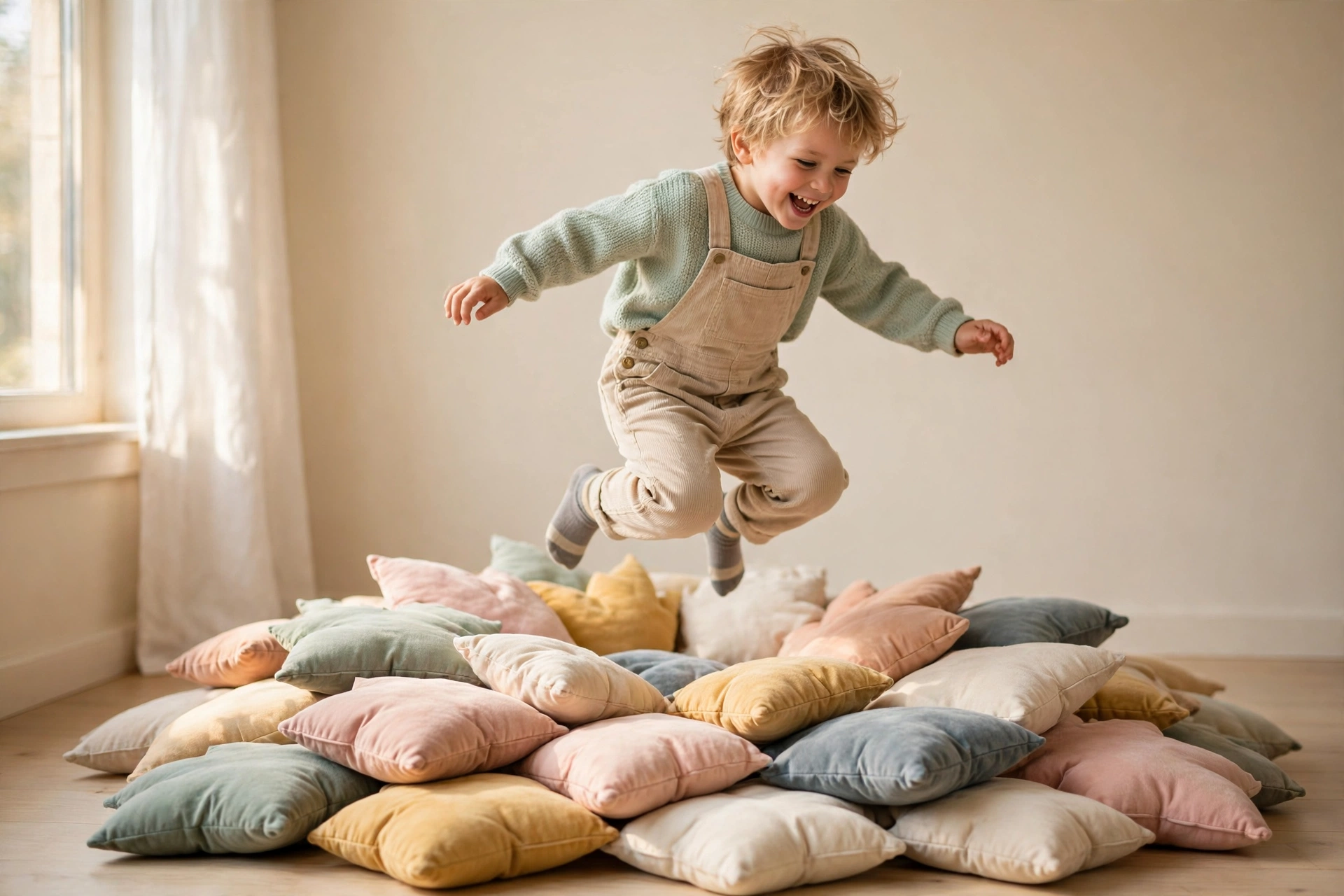
The classic fall leap. Outdoors: rake real leaves into a soft pile — and check it first, hands and eyes, for sticks, stones or anything the rake swept up, then jump on a clear floor space away from paths. Indoors (and honestly, just as beloved): build the pile from cushions and blankets in red, orange and gold, and jump into that instead. Take turns, count the jumps, and finish with the pile-toss — everyone throws handfuls of leaves (or cushions) up and lets them rain down. Two-foot jumps and soft, bent-knee landings build leg strength and balance, and burying each other gently in the pile is the week’s best sensory game.
4. Scarecrow freeze dance
Everyone is a scarecrow in a windy field. Music on: flap the floppy arms, wobble on one leg, let the whole body go loose and straw-stuffed. Music off: freeze — scarecrows stand perfectly still, or the crow gets you. The crow is a caller (take turns, and let your child crow loudest): a sharp “CAW!” at any moment means freeze too, music or not. Holding a wobbly one-legged freeze against every giggle is balance and self-control practice, and the floppy dancing in between is the silliest movement of the week. Clear the dance floor of tripping hazards first — scarecrows fall over enough on purpose.
5. Harvest basket carry
Load a basket with soft “apples” (balls, rolled socks, beanbags) and set a “field” to cross: a line to walk, a cushion stepping-stone or two, a gentle zigzag between cones. Your harvester carries the basket across without spilling a single apple — then walks it back and tries with one more apple aboard. Spills mean a hilarious rescue stop, not a failure: gather the apples, count them back in, and carry on. Carrying a load steady while the feet negotiate obstacles is balance, focus and arm strength together, and counting the cargo in and out is quiet maths on the move. Keep the basket light enough to succeed with effort — a full-to-falling basket ends the game early.
Make and create
Five harvest makes that fill the table with pumpkins and prints — and every one of them is hand-strength and hand-control practice wearing overalls.
6. Pumpkin printing with apple halves
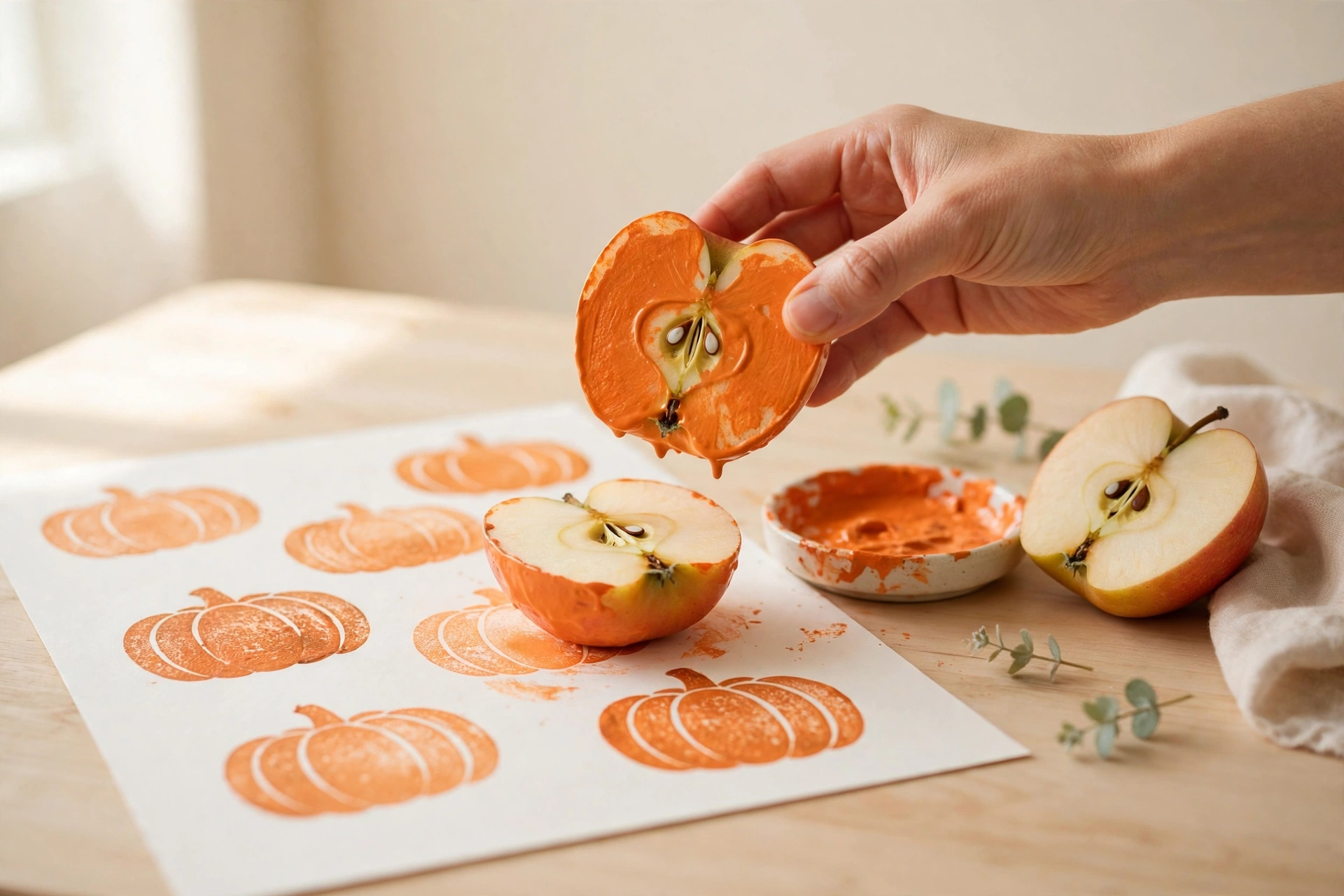
An adult cuts an apple in half across the middle (through the “equator”), and dips the cut face in orange paint. Pressed onto paper, the apple half prints a round orange pumpkin — round-ish, ribbed by nature, perfect. Add a brown fingerprint stalk on top once the print dries, and a green thumbprint leaf beside it. A whole patch can be printed in rows, one pumpkin per press. Pressing down firmly and lifting straight up without smearing is real hand control, and choosing where the next pumpkin in the patch lands is spacing practice. The printing apples are paint apples now, not snacks — paint first, and a fresh apple for eating afterwards if anyone asks.
7. Apple stamp pattern art
Same apple halves, new job: now the apples themselves are the stars. Red, green and yellow paint, and your child stamps apple prints in patterns — red, green, red, green marching across the paper — or stamps a wreath of apples around a plate’s edge, or covers a sheet of brown paper to make harvest wrapping paper. Cut through the apple the other way (top to bottom) and the print shows the star hidden in the middle: find it together before the stamping starts. Pattern rows are early maths you can hang on the wall, and the star reveal is the week’s small science magic. As with the pumpkins: stamping apples are for art, hands are washed after, and eating apples live in a different bowl.
8. Cinnamon pumpkin playdough
Make a batch of orange playdough together (your usual recipe, orange food colouring, and a generous shake of cinnamon stirred in by an adult) — or tint a bought batch and knead the spice through. Then the dough becomes the pumpkin patch: roll balls, flatten them slightly, press lines down the sides with a blunt knife or a lolly stick for the ribs, and add a green dough stalk. The smell is pure fall baking, and the rolling, pressing and rib-marking is hand-strength work of the most fragrant kind. One rule stated kindly and clearly: this dough smells like food but it is not food — it is never tasted, it lives in its tub between plays, and hands are washed when the patch is packed away.
9. Paper-bag scarecrow puppet
A paper bag, worn on the hand with the folded bottom as the face, becomes a scarecrow: draw or stick on a friendly face, glue strips of yellow paper or yarn around the head as straw hair, add triangle patches on the “shirt”, and a real paper hat on top. Then the puppet performs — it is the week’s best storyteller, and it can be the crow-caller for the freeze dance (activity 4) too, which delights everyone. Acting out harvest stories with a beginning, a problem and an ending is early storytelling, and a shy child will often say through a scarecrow what they will not say as themselves. Small parts (buttons for eyes) are drawn or glued firmly by an adult — puppets get hugged and waved hard.
10. Corn-cob rolling painting
An adult prepares this one: a dried corn cob (or a fresh cob with the kernels eaten and the cob washed and dried), with a fork or a stick pushed into each end as handles. Roll the cob through a shallow tray of paint, then roll it across a big sheet of paper — it prints a bumpy, dotted harvest pattern, row after row. Overlap colours for a woven-field effect. Controlling a rolling printer with two hands, keeping the rows roughly straight, is bilateral hand work — both hands doing different jobs together — and the pattern itself is a first printing lesson. Cobs are washed before and hands after; the painted cob is retired to the craft box, not the compost, until the paint is fully dry and the week is done.
Learn and discover
The thinking set: ordering, sorting, counting and one very small election — maths and science hiding inside the harvest basket.
11. Pumpkin size ordering
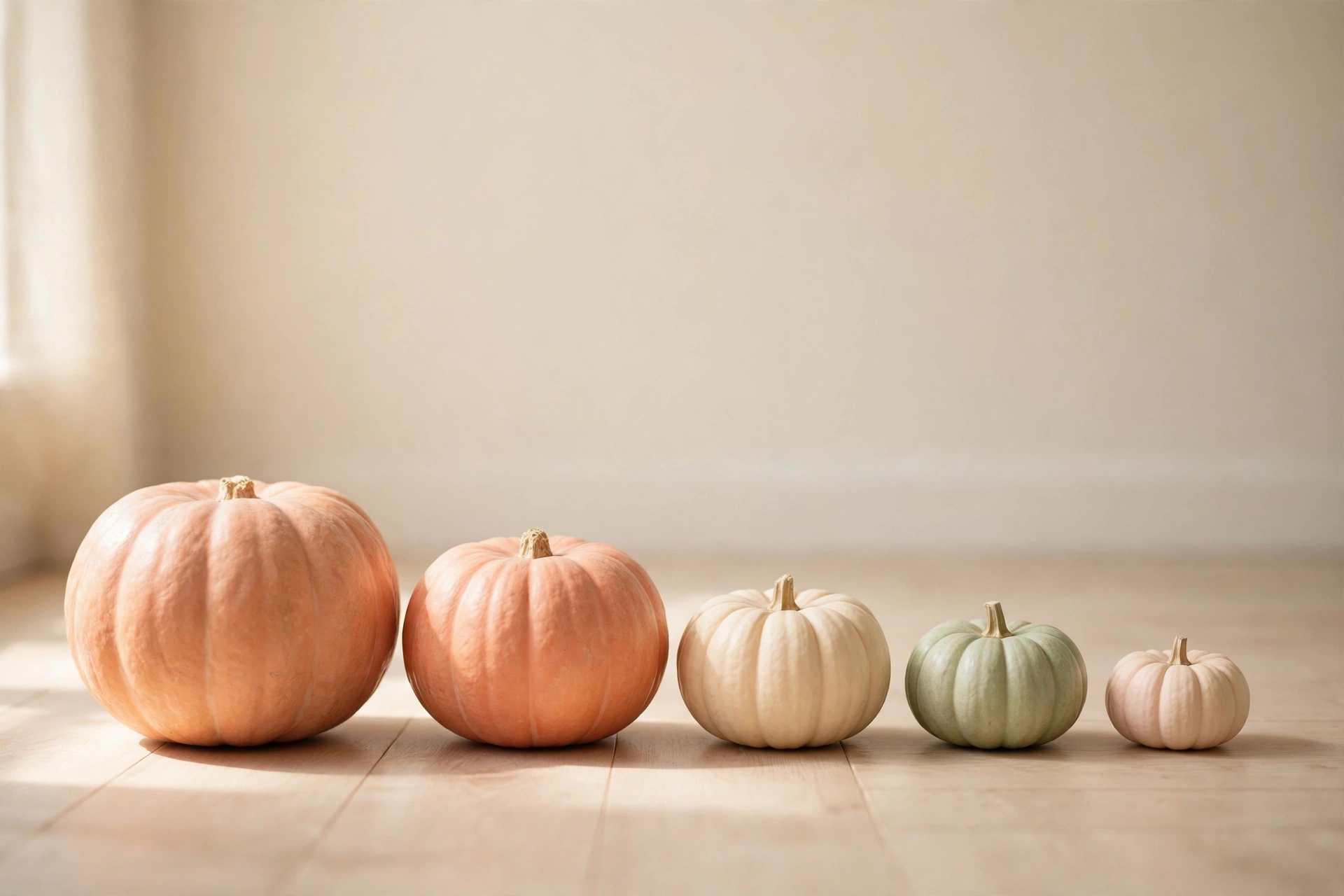
Line up the week’s round things by size: real pumpkins if you have more than one, or paper pumpkins cut in five sizes, or a pumpkin, an apple, a grape and a pea in a row. Your child orders them big to small, then small to big, then finds the middle one. Mix in a trick question — where does the watermelon go? (It is not a fall crop at all, and noticing that is the point.) Ordering by size, and saying the rule out loud (“this one is bigger than that one”), is seriation — the measuring thinking maths is built on. Paper versions keep this game alive all year; real pumpkins end the week at activity 13.
12. Apple colour sorting and counting
A basket of apples — real ones, or red, green and yellow paper or toy apples — and three baskets, bowls or hoops to sort them into. Sort by colour first, counting each colour’s apples as they land: how many reds? Who wins, red or green? Then sort a second way — big and small — and count again. Sorting by one rule, then re-sorting by a different rule, is flexible classifying, and the counting at every landing is one-to-one correspondence with a story attached. Real apples get washed before sorting and can be eaten afterwards — the taste-test (activity 15) is the natural next step, and anything not eaten same-day goes back to the fruit bowl, counted out and counted in.
13. Pumpkin seed scooping and counting
The harvest finale, and an adult job first: an adult cuts the pumpkin open — children never cut — and then the scooping belongs to your child. Scoop the seeds into a bowl with a big spoon, pull the stringy bits off together, rinse the seeds in a colander, and spread them to dry on a tray. Then count them: into piles of five, into a muffin tin one per cup, or along a number line drawn on paper — big seeds are satisfyingly countable. Scooping, separating and counting something real and slightly slippery is fine-finger work and honest maths at once. The safety rule, every time: pumpkin seeds are slippery mouth hazards for children who still mouth things — this activity is for the 3–5s at the table with you beside them, seeds stay out of mouths, and anything dropped on the floor is swept up before a younger sibling or a pet finds it.
14. Five little pumpkins finger play
The classic fall counting rhyme, acted on fingers: five little pumpkins sitting on a gate (five fingers up) — the first one says “Oh my, it’s getting late”, the second says “There are witches in the air”, the third says “But we don’t care”, the fourth says “Let’s run and run and fun”, the fifth says “I’m ready for some fun” — then “Ooooh” goes the wind (blow gently, sway the hand), out goes the light (fingers fold down), and the five little pumpkins roll out of sight (roll the hands away). Words vary between families; use the version you know, or simply count five pumpkins up and roll them away. Counting down from five on fingers, in order, with the whole story attached, is number-sequence memory — and the rolling-away ending never survives without laughter. Repeat until your child leads it and you are the audience.
15. Apple taste-and-vote
A tiny election with delicious candidates. An adult washes and slices two or three apple varieties — a sweet red, a tart green — and your child tastes a slice of each, thinks like a judge, and votes: a counter, a sticker or a stone placed under the picture of the favourite. Draw the tally as a simple chart — one mark per vote — and let siblings, grown-ups and the scarecrow puppet (activity 9, voting with help) join in until a winner is declared. Tasting carefully, comparing (“this one is sharp, this one is honey”) and recording a vote on a chart is describing-words practice and a first data chart in one sitting. The safety frame, stated first and always: check for apple allergies before anyone tastes, an adult does all the cutting and leads the tasting, slices are small, and opting out is completely fine — a judge who only smells and describes is still a judge.
Turn it into a theme week
Spread the fifteen across five days, two or three a day, and the theme does the teaching by repetition:
- Day 1 — Orchard day: the apple orchard dash (2), apple colour sorting and counting (12), and the taste-and-vote election (15) to crown the family’s apple.
- Day 2 — Pumpkin patch day: the pumpkin roll relay (1), pumpkin printing with apple halves (6), and size ordering (11) with the week’s pumpkins.
- Day 3 — Making day: apple stamp pattern art (7), the cinnamon pumpkin playdough patch (8), and the paper-bag scarecrow (9) finished in time to call the crows.
- Day 4 — Harvest work day: the basket carry (5), corn-cob rolling painting (10), and the seed scooping and counting (13) — open the printing pumpkin and count its treasure.
- Day 5 — Fall finale: the scarecrow freeze dance (4) with the puppet on crow duty, the leaf-pile jump (3), and five little pumpkins (14) performed for everyone as the closing show.
Short on time? Three days still works — pick one activity from each section per day. And a note for the harvest itself: the pumpkin order matters a little — print and order with it early in the week, scoop it late, once its display days are done. One pumpkin, three jobs: that is the harvest lesson, and it costs one small pumpkin.
Finish the week with printables
After five days of harvest play, some preschoolers ask for a pumpkin page of their own to colour or trace — and that request is the perfect moment for paper. FIMS Schools has free printable preschool and kindergarten worksheets, including first tracing and colouring pages: free preschool and kindergarten worksheets. A pumpkin or leaf colouring page or two to close the week is plenty — the play was the learning; the printable is the souvenir.
Read next
- Preschool Theme Activities — every theme week in one place: pick next week’s theme here
- Autumn Theme Preschool Activities — the leaf-and-conker sister page: the same season in its other name, with leaf catching, conker counting and cosy colour play
- 30 Activities for 5 Year Olds — everyday play for the oldest preschool year
Fall theme questions parents ask
Why is there a fall page AND an autumn page — aren’t they the same season?
They are the same season wearing two names — “fall” is the everyday American word, “autumn” the British one, and parents search for both, so FIMS keeps a page for each. They are not the same page twice: this fall page is built on pumpkins, apples and the harvest — rolling, printing, scooping and tasting — while the autumn page is built on leaves, conkers and pinecones, with leaf-catching, conker counting and cosy colour play. Do one week, or do both across the season; your child will not meet the same activity twice.
We can’t get pumpkins where we live — can we still do a fall theme?
Completely — the pumpkin is a shape and a job, not a shopping list. A small round melon, a sweet potato or a big orange does the rolling, ordering and printing jobs; the scooping-and-counting job can be done with any melon or squash, or with a bowl of large dried beans poured into a hollowed orange for the same scoop-and-count play at the table. And paper pumpkins — cut in sizes for ordering (11), printed for the patch (6) — carry the theme with no fresh produce at all. The season is the colours, the harvest and the counting; those grow everywhere.
Can my toddler join in the seed scooping?
The scooping motion, yes — the seeds themselves, not yet. Give a younger toddler the big spoon, the empty pumpkin (adult-cut) or a bowl of water and a big soft sponge, and let them scoop and squeeze beside you happily. But pumpkin seeds are slippery and exactly mouth-sized, so for any child who still mouths what they hold, swap the seeds for big soft pieces — chunks of the pumpkin’s own flesh cut large, or big pasta shells — and keep the real seeds at the older children’s end of the table, with an adult between. The counting can still be shared: toddlers make excellent official cheerers, and handing you the next big piece is a first job in the harvest crew.