
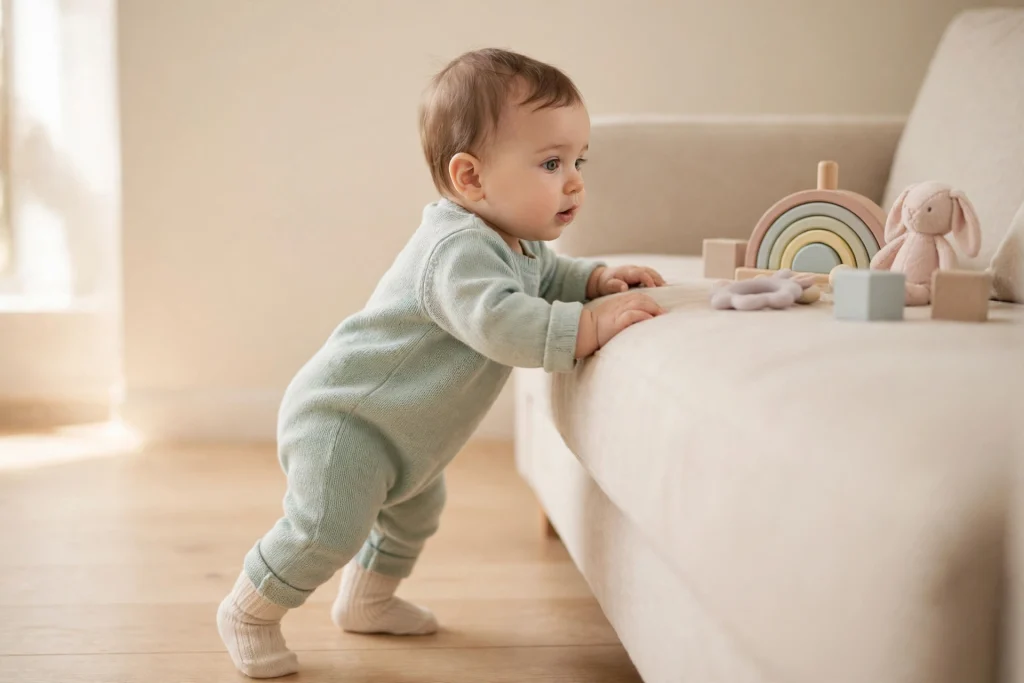
Short answer: These 12 activities for 9 month old babies use your furniture and kitchen cupboards — cruising courses, posting games and hide-and-find — all free, safe and screen-free. Nine months is the cruising month.
Quick facts
- Ages: 9 months
- Cost: free — ordinary household things
- Screen-free: yes — every idea on this page
- Skills: cruising, posting, pointing and first problem-solving
What to expect at 9 months
Around nine months, your baby is going places — literally. Many are crawling confidently, pulling up on the furniture and cruising sideways along the sofa, and some are already eyeing the walk across the gap. Hands take a leap too: the early pincer grip arrives, so your baby picks up smaller pieces between thumb and finger, points at the things they want you to see, and posts, drops and retrieves with real purpose. Babble sounds more like conversation now — long, tuneful strings with ups and downs — and familiar words like their name (and a firm “no”) clearly land. Object permanence clicks this month: hidden toys get searched for, not forgotten. Stranger wariness and clingy patches are common and healthy at this age. And everything still goes to the mouth — but now those clever fingers can find the tiny things, which makes the daily floor sweep more important than ever.
The information on this page is general information for parents, shared for learning and activity ideas. It is not medical advice, and it does not replace the guidance of a qualified professional. Every child develops at their own pace — if you have any concern about your child’s development, please talk to a qualified doctor or child-development professional.
Cruising and moving
Your baby is vertical now — pulling up, cruising sideways, and eyeing the gap between the sofa and the chair. These games feed the travelling, with you spotting every move.
1. The furniture cruising course
Line up stable furniture — the sofa, a heavy armchair, a low sturdy table — with small gaps your baby can bridge, and place a favourite toy at the far end, then another halfway. Cruising sideways, turning corners and crossing gaps is serious leg and balance work. Check every piece first: anything that wobbles, tips or slides gets moved out of the course.
2. Push-along play
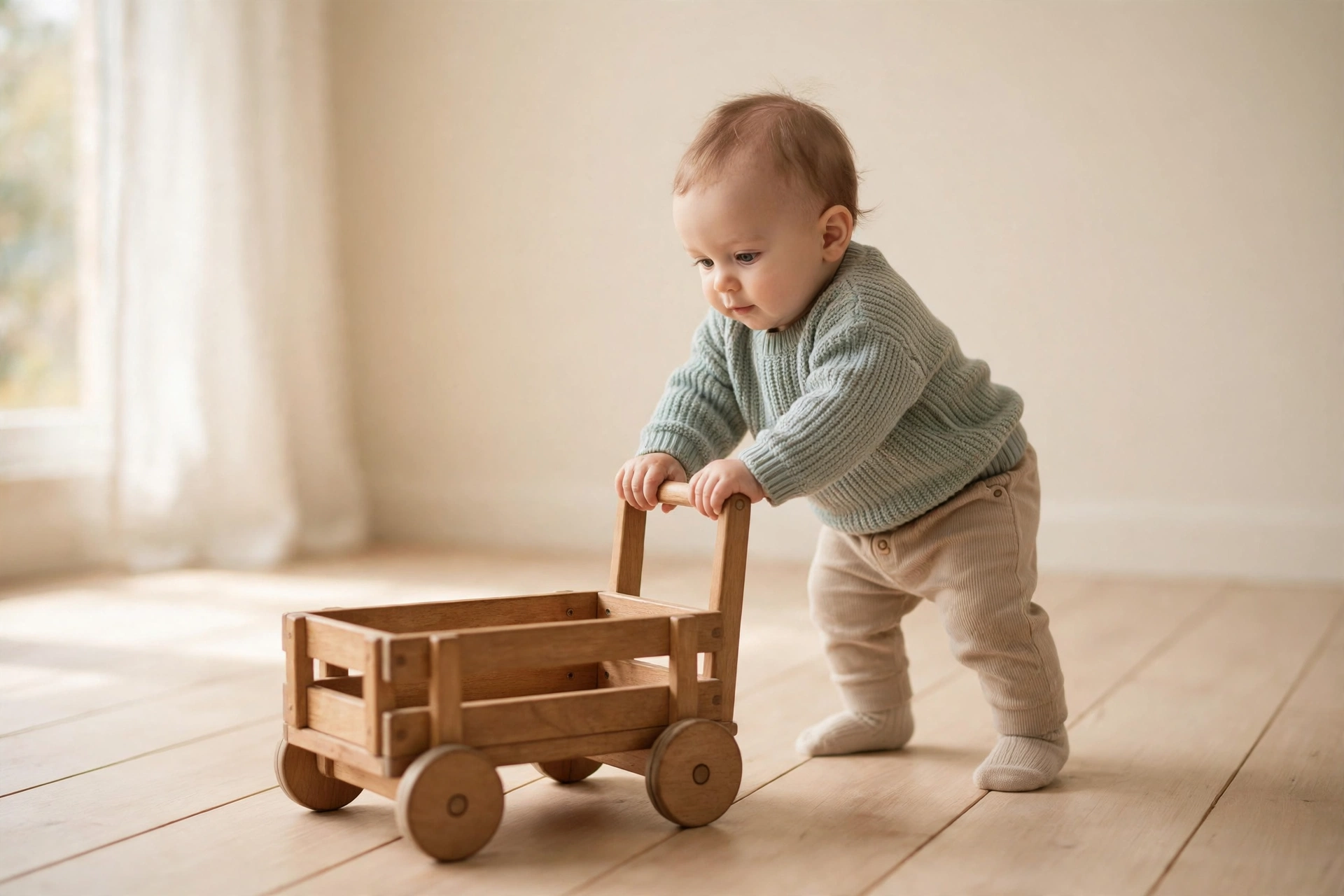
A sturdy wooden wagon — or a strong box weighted down with a few heavy books — makes a first push-along. Your baby pulls up on it and takes tottering steps, pushing it slowly across the floor, feeling enormously proud. Keep it on carpet or a mat so it rolls slowly, stay right beside them, and clear the runway of anything trip-sized.
3. Ball roll-and-fetch
Sit a short distance away and roll a big soft ball towards your baby; at nine months, many will crawl after it, grab it — and sometimes roll or push it back. Fetch-and-return turns a solo chase into a two-player game, the same give-and-take that conversation is built on. Choose a ball too big to mouth and soft enough to land on.
4. Stand-up copy games
Stand your baby at the sofa, facing you, and play copy-me: clap twice, wave, pat the cushion, bounce on bent knees. Your baby copies what they can and invents the rest — and holding on with one hand while clapping with the other is advanced balance practice. Keep it short, keep it silly, and keep the landing soft.
5. Stacking to knock down, at standing height
Set three or four big blocks or stacking cups on a low, stable table — or on the seat of the sofa, right where your cruising baby plays standing up. They will swipe the tower down with huge satisfaction, then pat the blocks and wait for the rebuild. Standing play strengthens the legs while the hands get busy causing delightful destruction.
6. The choosing cruise
Put a beloved toy at each end of the sofa and let your baby decide: cruise left for the bear, or right for the ball? Nine month olds have strong opinions, and cruising towards a goal they chose themselves keeps little legs moving far longer. Swap the toys, add a third stop on the armchair, and let the choosing continue.
Posting, pointing and finding
Sitting skills turn clever this month: fingers pinch, toys disappear and get found, and everything has a point — literally. This set feeds the detective in your baby.
7. Posting games
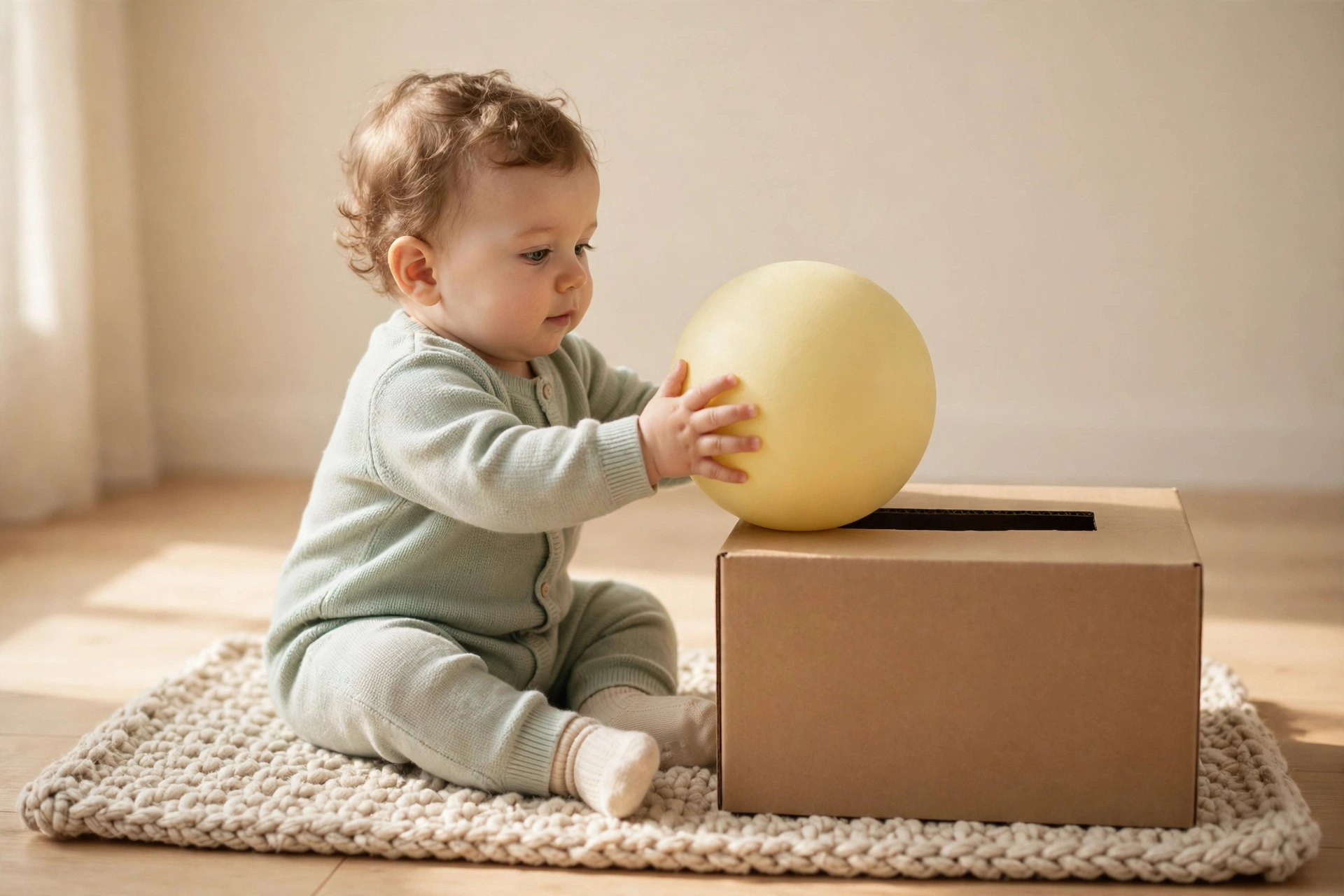
Cut a wide slot in the lid of a big box (an adult job), or use a large container with an opening much wider than the objects. Offer big balls, blocks or soft toys to post through — then open the box together: they’re still in there! Posting builds hand control and the lovely discovery that hidden things still exist. Wide slots and big objects only, every time.
8. Hide-and-find with two cloths
Show your baby a favourite toy, then hide it under one of two cloths while they watch. “Where’s it gone?” Nine month olds lift the correct cloth more and more often — real memory at work. Start easy by leaving a corner peeking out, and celebrate every find like a magic trick. Soon you will be the one who cannot fool them.
9. Pointing walks
Carry or cruise your baby around the house and garden, and follow that pointing finger: “Yes — the cat! The tree! Your cup!” Naming everything your baby points at turns a simple tour into a language lesson they lead themselves. Point back at things too (“Look — a bird!”) and watch their finger — and their eyes — follow yours.
10. Lids on, lids off
Collect big, clean tubs and containers with lids that press or rest on top (an adult unscrews anything threaded first). Your baby pulls lids off, bangs them, tries to put them back and occasionally succeeds — proper problem-solving with both hands. Everything big, clean and unbreakable; between lid sessions, the tubs double as drums and posting boxes.
11. Pincer pickup play
The thumb-and-finger grip arrives this month, and it loves practice. Offer big, soft, mouth-safe pieces to pick up one by one — large soft finger foods at mealtimes while you watch, or big soft blocks and fabric balls in play. Picking up, passing hand to hand and letting go on purpose is fine-motor gold. Sizes stay generous: anything that could fit through a toilet-roll tube stays out of the game entirely.
12. Water pouring at the splash tray
Back to the shallow tray on a towel, this time with a small cup or jug for pouring and a bigger one to catch. Your baby pours, splashes, fills, empties — and tries to catch the stream. It is hand–eye practice disguised as weather. You stay within arm’s reach the whole time: water play at this age happens with you, every second.
Staying safe at 9 months
- Babies explore with their mouths — offer only big, clean, washable things that cannot break or come apart.
- Nothing small: if it could fit inside a cardboard toilet-roll tube, it is too small for a baby. The new pincer grip picks up exactly those tiny things — crumbs, coins, buttons, pet food — so the daily floor sweep matters most this month.
- Water is only ever for splashing while you are holding your baby or within arm’s reach — never leave a baby alone with water, not even for a second.
- Pulling-up furniture must be stable: push-test anything your baby cruises on, move wobbly pieces out of the play space, and keep cords, cables and tablecloths out of reach — a pulled tablecloth brings everything on the table down with it.
Read next
- Baby Activities — Simple Play Ideas for 0–12 Months — the whole first year, month by month
- Activities for 8 Month Old — the stage just before this one: crawling games, cushion climbs and treasure baskets
- 25 Fine Motor Activities for Toddlers — where all this pinching, posting and stacking leads next
Activities for 9 month olds — questions parents ask
How long will a 9 month old play at one activity?
A few minutes per game is still normal — but a mobile baby now chains games together, cruising from one to the next, so one floor session can stretch happily. Follow your baby: when the pointing finger leads somewhere new, the activity has simply moved, not ended. Short bursts across the day, mixed with songs, books and chats, add up to plenty.
My baby is not pulling up or cruising yet. Are these activities still OK?
Yes. Babies reach standing and cruising across a wide span of months, and plenty of healthy 9 month olds are still happiest crawling and sitting. The floor-level games on this page — posting, hide-and-find, ball play — build exactly the strength and confidence that cruising is made of, and low, stable furniture invites pulling up whenever your baby is ready. If your baby’s movement ever worries you, mention it to your doctor or health visitor.
Do I need special toys for any of this?
No — the stars of this page are your sofa, a box with a slot in the lid, tubs, cloths and a ball. The two things worth choosing carefully are the same as ever: sturdy board books made for babies, and anything small enough to interest a pincer grip — which at this age means keeping it off the floor entirely.