
Short answer: Beach theme preschool activities bring the seaside home: sand-tray castles, shell sorting, float-or-sink games and crab-walk races for ages 3–5 — all you need is a water tray and pretend sand; a real beach is a bonus.
Quick facts
- Ages: 3–5 years
- Theme: beach theme — a week of seaside play, mostly at home
- Theme week: 3–7 days — one theme, dipped into a little each day
- Cost: free — ordinary household things, a tray of sand and a tray of water
- Screen-free: yes — every activity on this page
Move and play
The beach is a moving place — swimming, splashing, racing sideways like a crab, dancing on the sand. This first set borrows all of it, no coastline required, and it is the energy-burning part of the week.
1. Pretend swimming on mats
Lay a mat or a big towel on the floor — that is your sea. Your child lies on their tummy and “swims”: big slow front-crawl arms, then rolling over for backstroke arms, then holding the edge of the mat and kicking both legs fast, fast, fast. Call the strokes like a swimming teacher, finish with a float — flat on the back, arms out, very still, counting slowly to ten. Changing position and holding the float still is balance and body control, and the kicking is pure joy with a purpose: strong legs.
2. Beach-ball keep-it-up
One beach ball — or a balloon, which floats down slowly and kindly for younger children — and one rule: don’t let it touch the floor. Pat it back and forth between you, count every tap out loud together, and try to beat yesterday’s number. Add a towel held between two people as a “net” when the game gets easy. Tracking a moving ball and timing the pat is hand-eye coordination in its happiest form, and the counting sneaks in number practice that never feels like work.
3. Towel beach-parade dance
Every dancer gets a beach towel: over the shoulders like a superhero cape, held high like a sail, or twirled (carefully, away from faces) like a flag. Play something cheerful and parade around the room, towels flying. When the music stops, everyone lays their towel flat in one quick movement and sits on their own little island of sand before the “wave” — you, swooping gently past with a blue scarf — can catch them. Listening for the stop and moving fast is self-control practice, and the islands make a lovely giggling finale.
4. Sandcastle stomp-freeze game
Crouch down and build an imaginary sandcastle together: pat pat pat the sand, scoop the moat, stand the tower up tall — hands shaping the air. Then someone shouts “Wave coming!” and a blue scarf or towel sweeps low across the floor. Everyone must jump up and freeze, feet together, arms still, before the wave reaches their castle — anyone caught mid-wiggle rebuilds from the sand up. Freezing on a signal, again and again, is exactly the listening-and-stopping skill school runs on, and the rebuilding is cheerful, not a punishment.
5. Crab-walk races
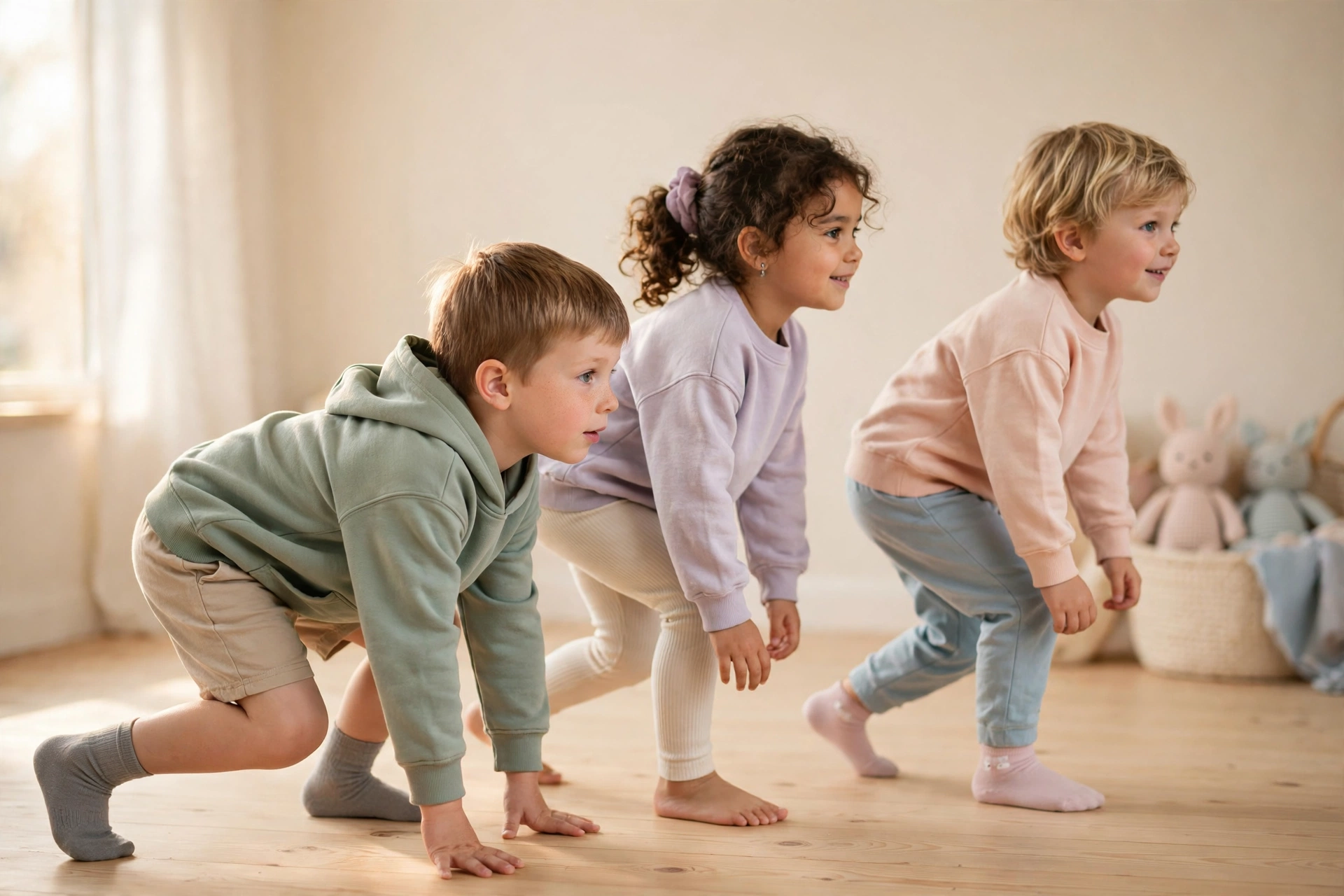
Hands and feet on the floor, tummy facing the ceiling, bottom lifted — now scuttle sideways like a crab, which is harder and funnier than it looks. Race across the room sideways, crab against crab, or carry a soft toy on the tummy “shell” and try not to drop it. Short races only: crab walking is real work for arms, shoulders and tummies, and wobbly collapses into giggles are part of the game. Clear the course of anything hard or sharp first, and crabs rest whenever they need to.
Make and create
Five makes that bring the beach indoors: a whole tray of sand, prints from shells, and a beach small enough to fit in a box and keep all week.
6. Sand-tray castles
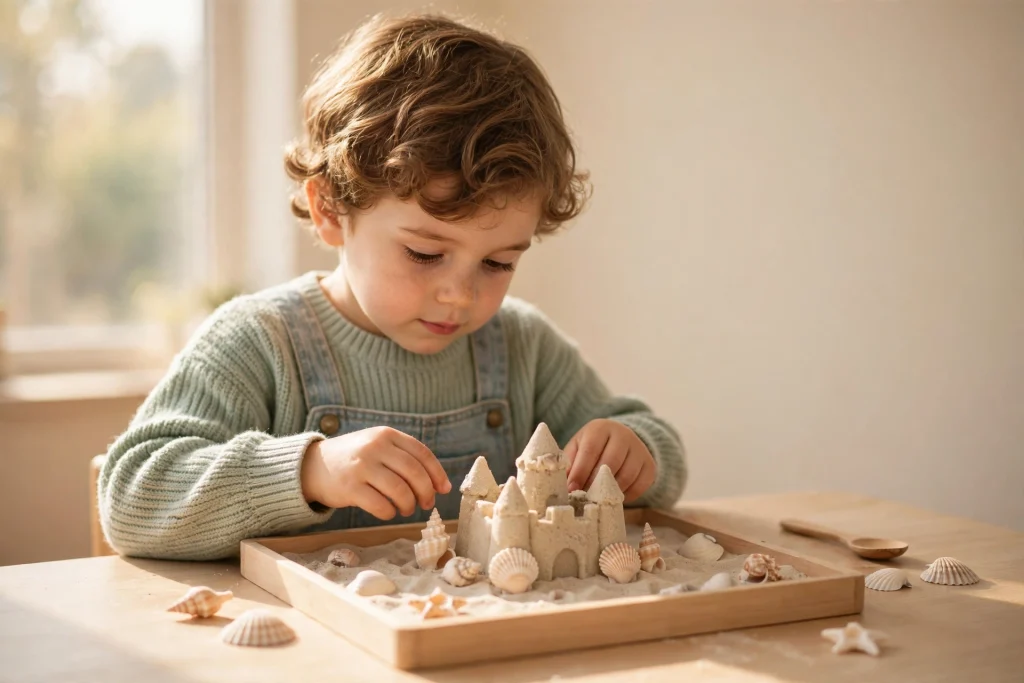
Fill a shallow tray or a washing-up bowl with kinetic sand, or ordinary play sand very slightly dampened so it holds a shape. Cups and yoghurt pots are the castle moulds: pack, level, turn out carefully, lift — a castle. Decorate the towers with shells and smooth stones, dig a moat with a spoon, and finish with a paper-flag on a cocktail stick (an adult handles the stick, and it comes out when play ends). Damp sand is for hands at the table with you beside them — sand stays in the tray, never in mouths, and hands are washed when the building site closes.
7. Shell printing
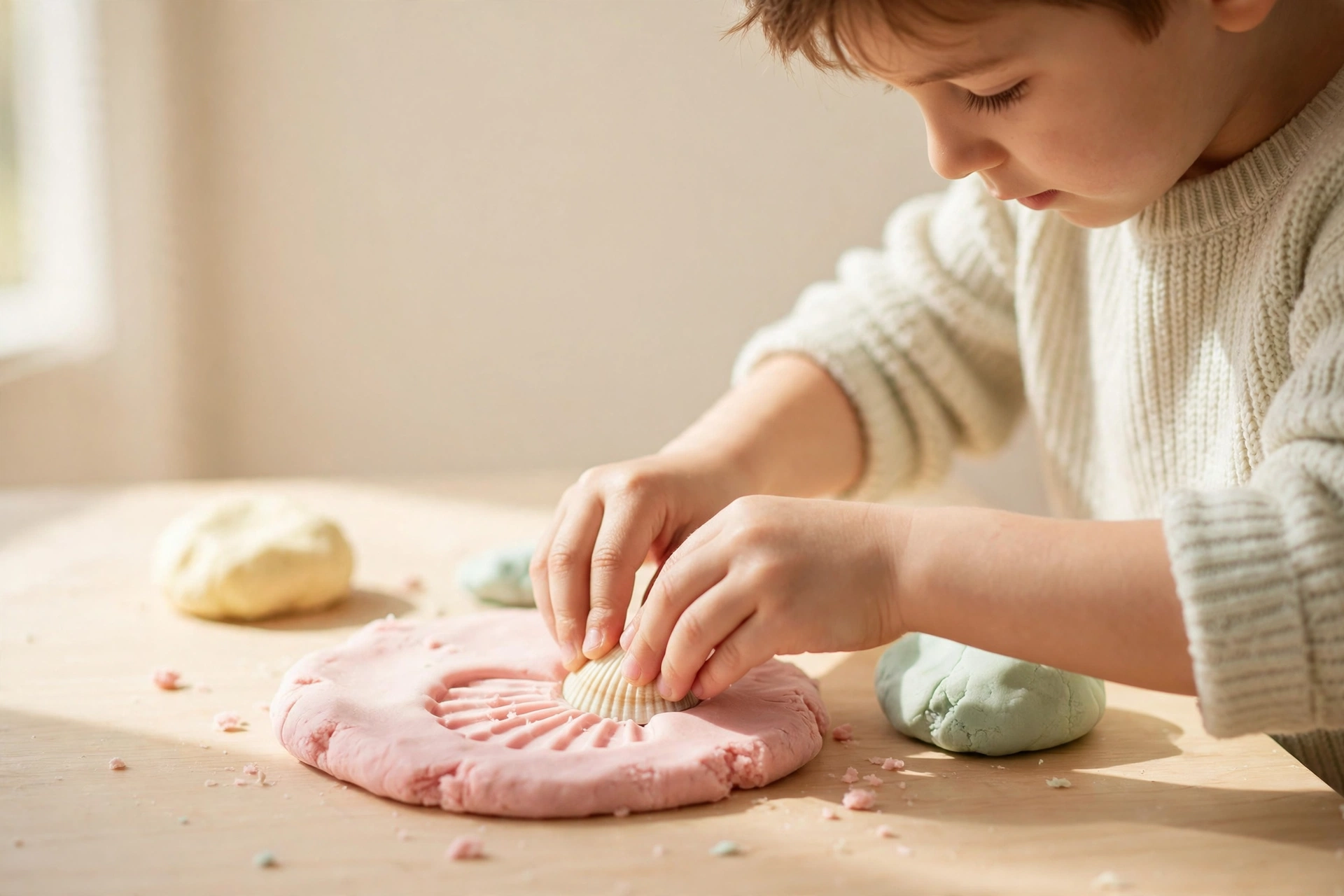
Two ways to print with a shell. First, the fossil way: roll playdough flat, press a big shell in firmly, lift it out — a perfect shell fossil, made in a second. Second, the paint way: dip the ridged edge of a large shell into washable paint on a plate and stamp fan shapes across paper — a whole row makes a seaside bunting pattern. Use big, smooth shells you have washed well in soapy water and checked for sharp edges; chipped or pointed shells are look-only treasures, kept on the windowsill instead of in the paint.
8. Paper sun with handprint rays
Every beach day needs a sun. Draw or cut a big yellow circle — a paper plate painted yellow is perfect — and glue it in the middle of a large sheet. Your child paints one hand yellow or orange and prints handprints all around the circle, fingers spread: those are the sun’s rays. Count the rays together as they go on. Hand printing is spacing and pattern sense as much as art, and the finished sun on the wall cheers up the whole theme week. Aprons on, and hands washed straight after — as always, paint is for paper, not for tasting.
9. Fish collage with shiny scales
Draw a big simple fish outline on card (an adult draws; your child can trace over the line). Cut or tear shiny paper — sweet wrappers, foil, coloured tissue — into small scale shapes, and glue them on in overlapping rows, tail to head, just like real scales. Add a big button or drawn eye. Overlapping in rows is sequencing and fine finger work, the tearing is hand strength, and a fish that actually glitters is deeply satisfying. Small cut pieces stay at the table, and the collage fish swims up onto the wall when the glue dries.
10. Beach in a box
A shoebox or a shallow tray becomes a whole small-world beach: sand (or yellow crumbled paper) at one end, a strip of blue cloth or paper for the sea, shells and stones along the shoreline, a tiny umbrella made from a paper circle on a stick, and little figures to visit. Your child arranges it, rearranges it, and tells the stories of the people at this beach. Small-world play is storytelling with the hands — who is swimming, who is building, where is the picnic — and because it lives in its box, the beach can come out again every day of the week. Check every piece is big and whole before a younger sibling joins in.
Learn and discover
The thinking set: sorting treasure, counting fish, and finding out what the sea keeps and what it sinks — real early science and maths, played in a water tray.
11. Sort the shells and stones
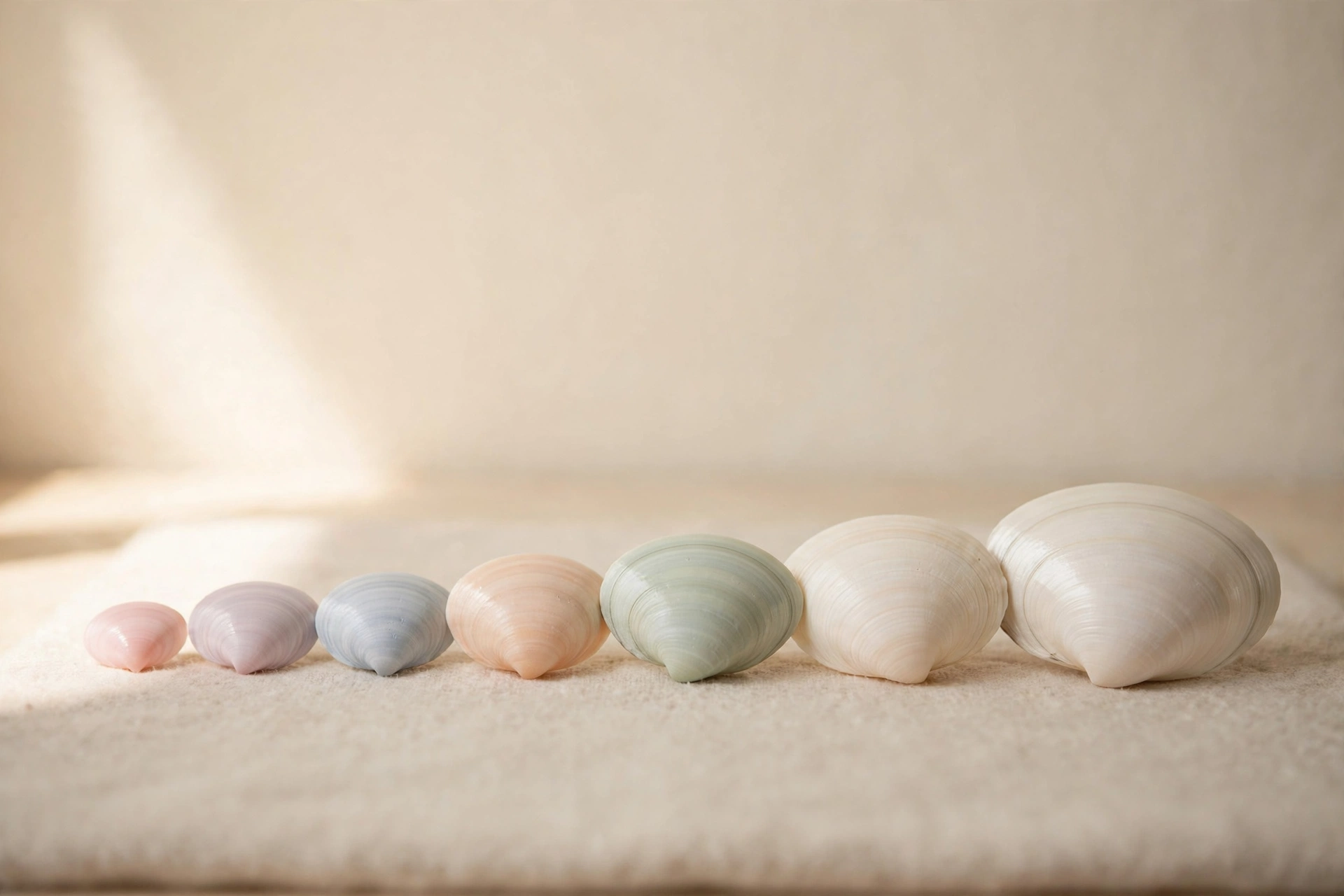
Spread your shell and stone collection on a mat and sort it together, one rule at a time: shells in one hoop, stones in another. Then change the rule — big to small in a long line, rough ones and smooth ones, striped and plain. Talk about the rule out loud as you sort: “this one is stripy AND big — where does it live now?” Sorting by a rule, saying the rule, and coping when the rule changes is classifying — the same thinking maths and science run on. Washed shells only, sharp-edged ones stay in the look-only pot, and the collection goes back in its box when the game ends.
12. Count the fish into numbered buckets
Cut simple fish from coloured paper (or use toy fish), and label small buckets, tubs or paper “pools” with big numbers — 1, 2, 3, 4, 5. Each bucket is hungry for exactly its number of fish. Your child counts the fish in, one by one, touching each as it lands, then you check together: does the 4 pool really hold four? Counting out an exact number for a customer is one-to-one correspondence — the heart of early number sense — and the checking makes it a game rather than a test. Swap the labels mid-game for a second round.
13. Float or sink?
The classic water-tray experiment, beach edition. Gather seaside things: a shell, a smooth stone, a cork, a piece of driftwood or a leaf, a plastic fish, a coin-free bottle cap. For each one, your child predicts first — float or sink? — holding it up, feeling its weight, making the guess out loud. Then in it goes. Keep a simple tally on paper: a sun for floaters, a wave for sinkers. Predicting, testing and being happily wrong is the scientific method in a washing-up bowl. Water rules, as always: an adult stays right there the whole time, and the tray is emptied when the experiment ends.
14. Beach day and night — weather chat
Make simple picture cards together: the sun, a cloud, rain, the moon and stars, a hat, a bucket, a towel, a torch. Lay out a “day at the beach” scene and a “night at the beach” scene, and sort the cards between them — where does the hat belong? What about the torch? Then chat about the weather on the cards: what would we wear if the rain card came to our beach? What does the sea sound like at night? Sorting by time and weather, and dressing imaginary people for the conditions, builds the everyday science words — hot, cold, wet, dark, bright — that children use to describe their whole world.
15. Letter fishing in the sea tray
Fill a tray with blue-tinted water, or lay blue cloth in a dry tray for a no-splash version, and float magnetic letters in the “sea”. The fishing rod is a stick with string and a magnet tied on (an adult ties it firmly and checks the knot). Your child fishes for letters: first the letters of their own name, laid out in order on a towel “beach”, then any letter you call — “can you catch the S the crab is hiding?” Letter recognition while fishing is early reading with a story attached, and the careful dip-and-lift is lovely fine-motor practice. Magnets are tools, not toys for mouths — fishing happens at the table with you, and the rod and letters are put away afterwards.
Turn it into a theme week
Spread the fifteen across five days, two or three a day, and the theme does the teaching by repetition:
- Day 1 — Arriving at the beach: pretend swimming (1), the paper sun (8), and sorting the shell treasure (11).
- Day 2 — In the water: beach-ball keep-it-up (2), float or sink (13), and letter fishing (15).
- Day 3 — Building day: sand-tray castles (6), shell printing (7), and the stomp-freeze game (4) to burn off the sitting.
- Day 4 — Seaside creatures: crab-walk races (5), the shiny fish collage (9), and counting fish into buckets (12).
- Day 5 — Beach party: towel parade dance (3), beach in a box storytelling (10), the day-and-night weather chat (14), and the sun on the wall watching over it all.
Short on time? Three days still works — pick one activity from each section per day. And if a real beach trip fits into your week, treat it as the party at the end, not the point of the theme: the rules there are short and non-negotiable — a child stays within arm’s reach of an adult near water, always; hats, shade and sunscreen in the sun; and shells come home only after a good wash, with anything sharp left behind on the sand.
Finish the week with printables
After five days of seaside play, some preschoolers ask for a beach page of their own to colour or trace — and that request is the perfect moment for paper. FIMS Schools has free printable preschool and kindergarten worksheets, including first tracing and colouring pages: free preschool and kindergarten worksheets. A sea or beach colouring page or two to close the week is plenty — the play was the learning; the printable is the souvenir.
Read next
- Preschool Theme Activities — every theme week in one place: pick next week’s theme here
- Ocean Theme Preschool Activities — go under the waves: the sea-creature sister theme to this one
- 30 Activities for 3 Year Olds — everyday play for the younger end of preschool
Beach theme questions parents ask
We don’t live near a beach — can we still do this theme?
Yes — that is exactly what this page is for. Fourteen of the fifteen ideas were written for home: the sea is a mat or a water tray, the sand lives in a tray, and the shells can come from a craft shop or a nature table as happily as from a shoreline. Children learn the beach words, the sorting, the counting and the stories just the same; a real trip, if one ever happens, simply becomes a lovely day of spotting things they already know.
Is sand play safe for a toddler who wants to join in?
With the big-shell, close-up version, yes. Keep the sand tray up on the table out of grabbing range while the preschooler builds, and give the toddler their own safe station alongside: big washed shells and stones to hold and post into a box (nothing small, nothing sharp), a shallow water tray to splash in, and an adult right there — sand and small shells must never reach a mouthing child’s hands. Stop the moment either child is tired of it; joining in for five happy minutes is a complete success at this age.
What can we collect on a real beach trip for this theme?
Smooth stones, washed-up whole shells, pieces of driftwood, and seaweed to look at (that one stays a look-only treasure, and goes back before you leave). Wash everything in soapy water when you get home, check shells for sharp or broken edges, and only keep pieces big enough that they are safe around little siblings. A small collection box becomes the week’s sorting treasure (activity 11) and the decoration for the sand-tray castles — one trip can stock the theme for a month.