
Short answer: Family theme preschool activities celebrate the people a child loves most: drawing your family, marching in a family parade and measuring who is tallest — fifteen ideas for ages 3–5, with things you have at home.
Quick facts
- Ages: 3–5 years
- Theme: family theme — a week all about the people who love us
- Theme week: 3–7 days — one theme, dipped into a little each day
- Cost: free — ordinary household things
- Screen-free: mostly — the play is hands-on; one or two activities peek at a family photo
Move and play
A family is moving from the moment the alarm rings — waking, washing, helping, hurrying, hugging. This first set borrows that everyday energy, and it is the part of the week that ends in happy tiredness.
1. Wake-up routines action game
Call out a family routine and everyone acts it out, big and silly: “Wake up!” (a huge stretch and a yawn), “Brush teeth!” (mime the brush, spit, rinse), “Get dressed!” (wriggle into invisible clothes), “Wave goodbye!” (both arms, full farewell), “Bedtime story!” (everyone flops down and pretends to listen). Speed the calls up until the whole family is in giggles, then let your child be the caller. Acting out the day’s order is memory and sequencing practice — and a child who has rehearsed the morning as a game often walks through the real one more happily.
2. Family parade march
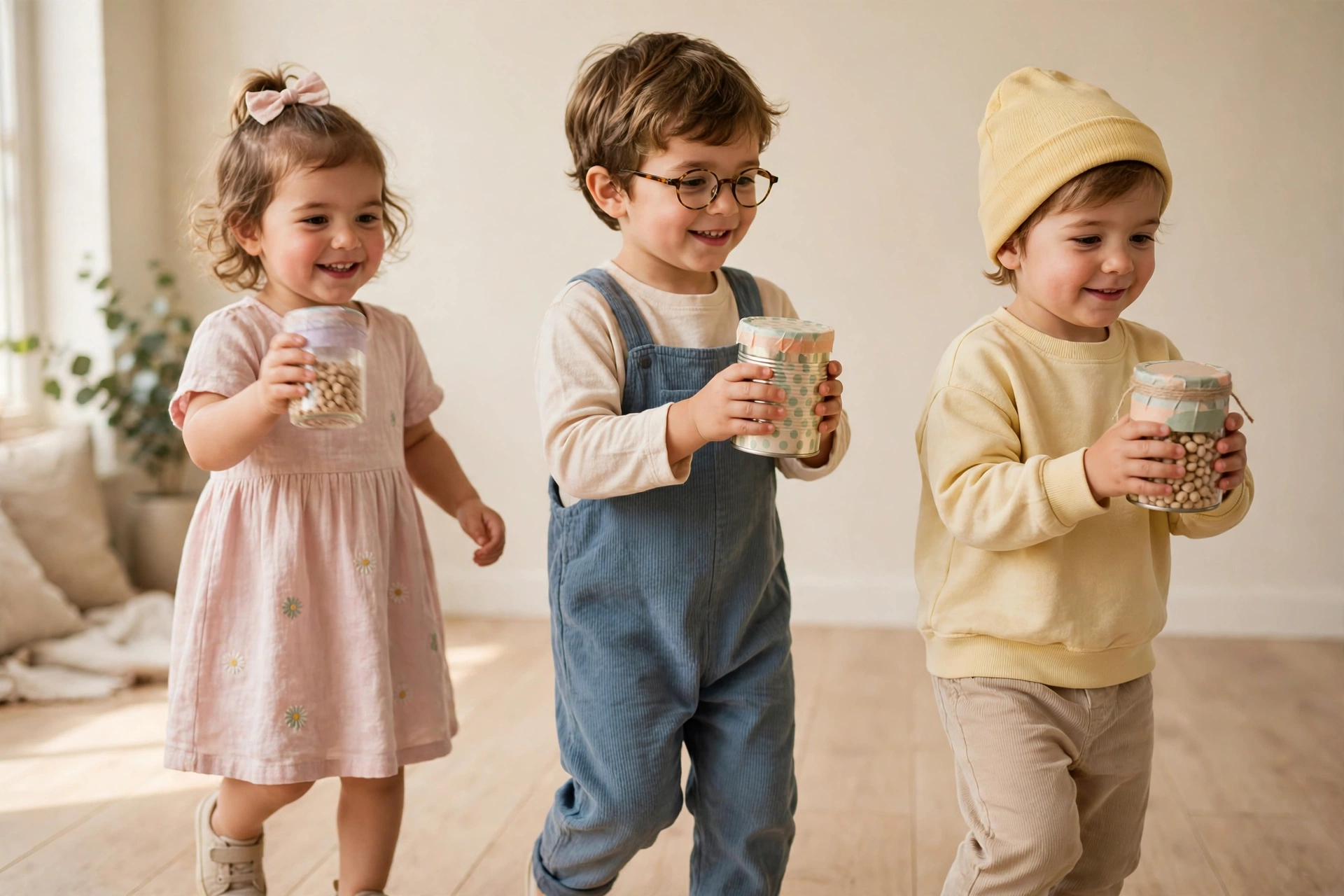
Every parade needs a leader, a line and a noise. Line up behind your child — grown-ups, siblings, teddies and dolls all count as family for parade purposes — each carrying a homemade shaker (a sealed tub with a few dried beans inside) or a spoon-and-pan drum, and march around the room or garden: knees up, instruments shaking, scarves waving. Swap leaders every lap, and finish with a march past the “crowd” — the cushions, applauding wildly. Following a leader in a line is early social play, and marching to a steady beat is rhythm and coordination in disguise.
3. Helping-hands relay
The kindest race there is. At one end of the room a soft toy “baby” waits in a blanket bed; at the other, its cot. Your child carries the baby carefully across — two arms, slow steps, no dropping on our watch — tucks it in with a pat, and hurries back to tag the next helper. Add rounds: carry the “shopping” (a bag with two light cushions) in from the car, deliver a folded towel to the bathroom, ferry teddies one at a time to the story chair. This is a relay scored on gentleness, not speed: whole-body control, care, and the lovely feeling of being a person who helps.
4. Family-photo freeze dance
Music on: everybody dances like a family at a wedding — the sillier the better. Music off: freeze into a “family photo” pose — arms around invisible shoulders, cheesy grins, bunny ears behind someone’s head. Hold it… hold it… and release. If you like, take a real photo of the best freezes (this is the one screen moment of the week, and it is worth it) and start a freeze-photo gallery on the fridge. Listening for the stop while your body wants to keep dancing is self-control practice, and posing together is the week’s simplest portrait of all.
5. Walk like the people we love
Someone calls a much-loved person, and everyone walks the way they do — kindly, the way you’d imitate a favourite character in a story. The tall grown-up stride, long and purposeful. The tiny toddling steps of a baby brother or sister, arms up for balance. Grandma or Grandpa’s careful walk with a pretend walking stick, stopping to wave at neighbours. The slow, rocking walk of a parent carrying a sleeping baby, shushing softly. Copying how bodies move builds body awareness and balance — and talking about the people we love, while we walk like them, is the heart of this theme.
Make and create
Five makes that fill the walls with the most important people in the world — and every one of them is fingers, scissors and glue practice wearing a costume.
6. Draw our family portrait
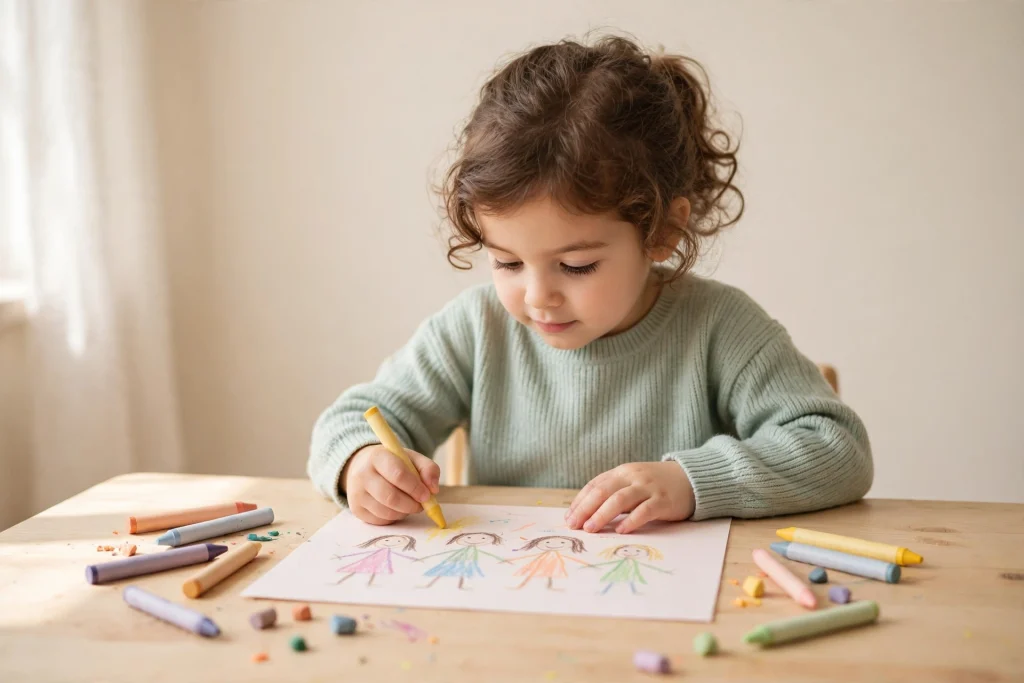
The centrepiece of the week. Take the biggest sheet of paper you have, and draw everyone who belongs: the people who live in your house, grandparents far away, the baby, the cat — whoever your child says is family goes in. Talk while you draw: who stands tallest, who needs their glasses drawn on, what colour is everyone’s hair today. If drawing people feels hard, start with circles for heads and let the details be dots and grins — it is a portrait if the artist says it is. Hang the finished masterpiece where the family eats, and expect additions all week. Choosing who to include, and fitting everyone on the page, is planning, early art and a conversation about love, all at once.
7. Handprint family tree
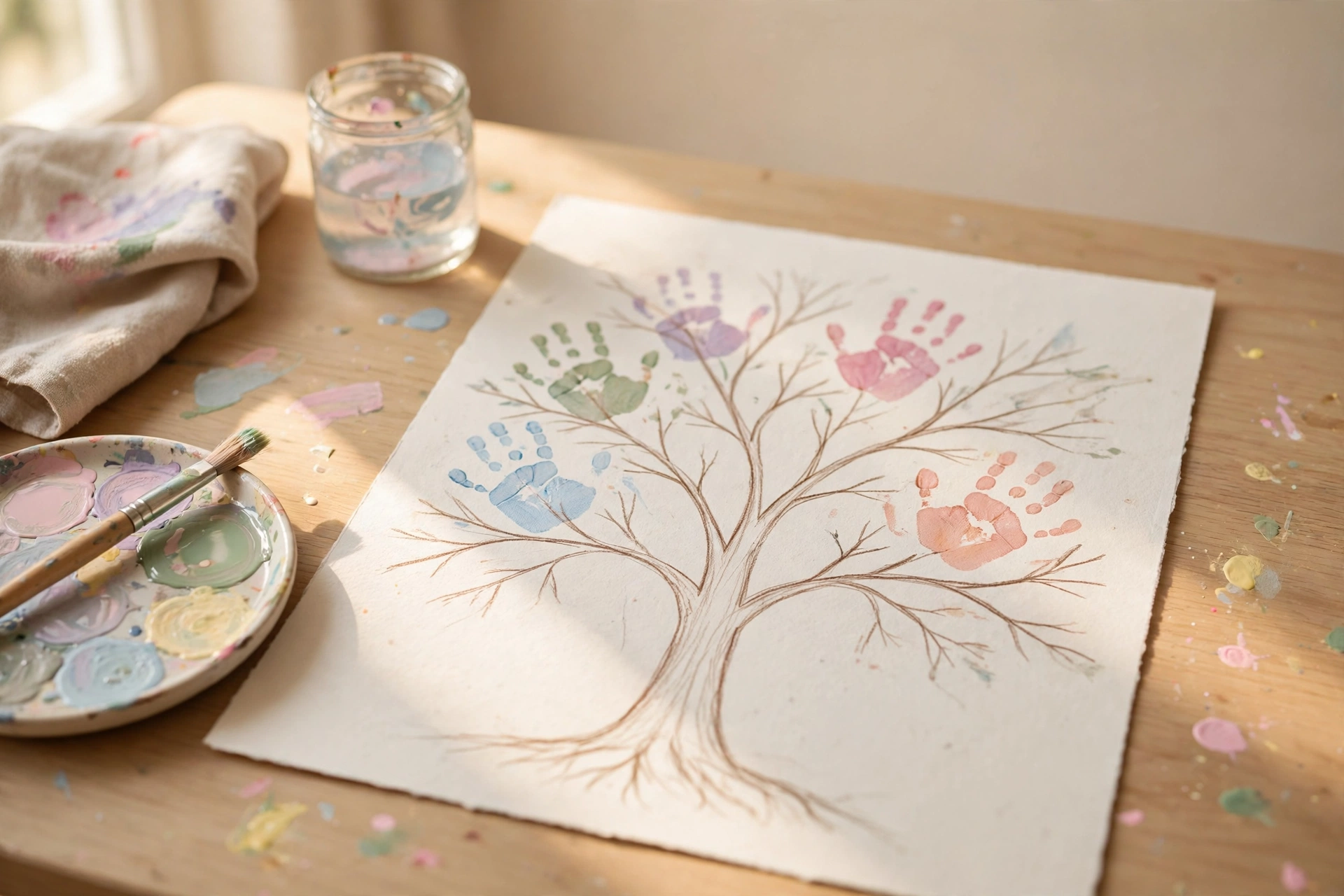
Draw or paint a thick brown trunk with a few branches on a big sheet. Then the leaves: everyone’s handprints in greens, pressed around the branches — one print per person in the family. A grandparent who lives far away can be a print sent in the post, or a leaf drawn in their favourite colour with their name beside it. Label each print with a name (an adult writes; older preschoolers copy their own). Underneath it all sits the picture’s quiet truth: a family, like a tree, is held up by the people who look after it. Leave some empty branches — families grow, and there is room.
8. Paper people chain
Fold a long strip of paper into a concertina, draw half a person along the folded edge — head, an arm reaching to the fold, body, legs — and cut (an adult cuts for younger children; keen five-year-olds can snip with safety scissors and a grown-up beside them). Unfold, and a whole row of people stands there holding hands. Now decorate one person as each member of the family — this one’s bun, that one’s beard, the baby in a blanket, the dog if he made the cut. Count the people, count the holding hands, and string the chain across a doorway. Folding, cutting and unfolding to reveal a pattern is early maths you can hold — and a chain of people holding hands is this theme in a single picture.
9. Build our house from boxes
A big cardboard box, or several small ones taped together, becomes your actual house: a door cut in the front (an adult’s knife work, done before play starts, away from little hands), windows drawn or cut with flaps, and rooms inside divided with smaller boxes or drawn lines. Who sleeps where? Where does the cooking happen? The paper people chain figures, peg dolls or teddies move in as residents and live the week in it — breakfast in the box kitchen, stories in the box bedroom. Planning a home and fitting people into rooms is early design, and it brings a flood of home vocabulary with it: hallway, doorstep, roof, chimney, stairs.
10. A frame for our family picture
Every portrait deserves a frame. Glue four wide strips of card, craft sticks or rolled newspaper around the edges of the family portrait (or a favourite family photo, if you have one printed), and decorate: pasta shapes, torn-paper mosaics, fingerprints in a row, or a pattern of everyone’s initials. Older preschoolers can work out the corners themselves — measuring a strip against the picture’s edge and deciding “too long” or “just right” is real measuring. The framed picture also makes a wonderful gift for a grandparent — and if that grandparent lives far away, a photo of your child holding the frame is a fine way to send it.
Learn and discover
The thinking set: counting the people we love, measuring them, reading their names and hearing their stories — maths and language built entirely out of family.
11. Count and sort our family
Spread out the week’s materials — the portrait, the handprint tree, family photos if you have them, drawings if you don’t — and start counting. How many people are in our family? How many grown-ups, how many children? How many live in our house, and how many do we visit or call? Sort the pictures into little groups and count each one: people with glasses, people with curly hair, people who live with us, people far away. Sorting by a rule you can say out loud (“these are the people who live in our house”) is classifying — the thinking underneath maths and science — and the subject is the first set of facts every child ever learns: us.
12. Who is tallest?
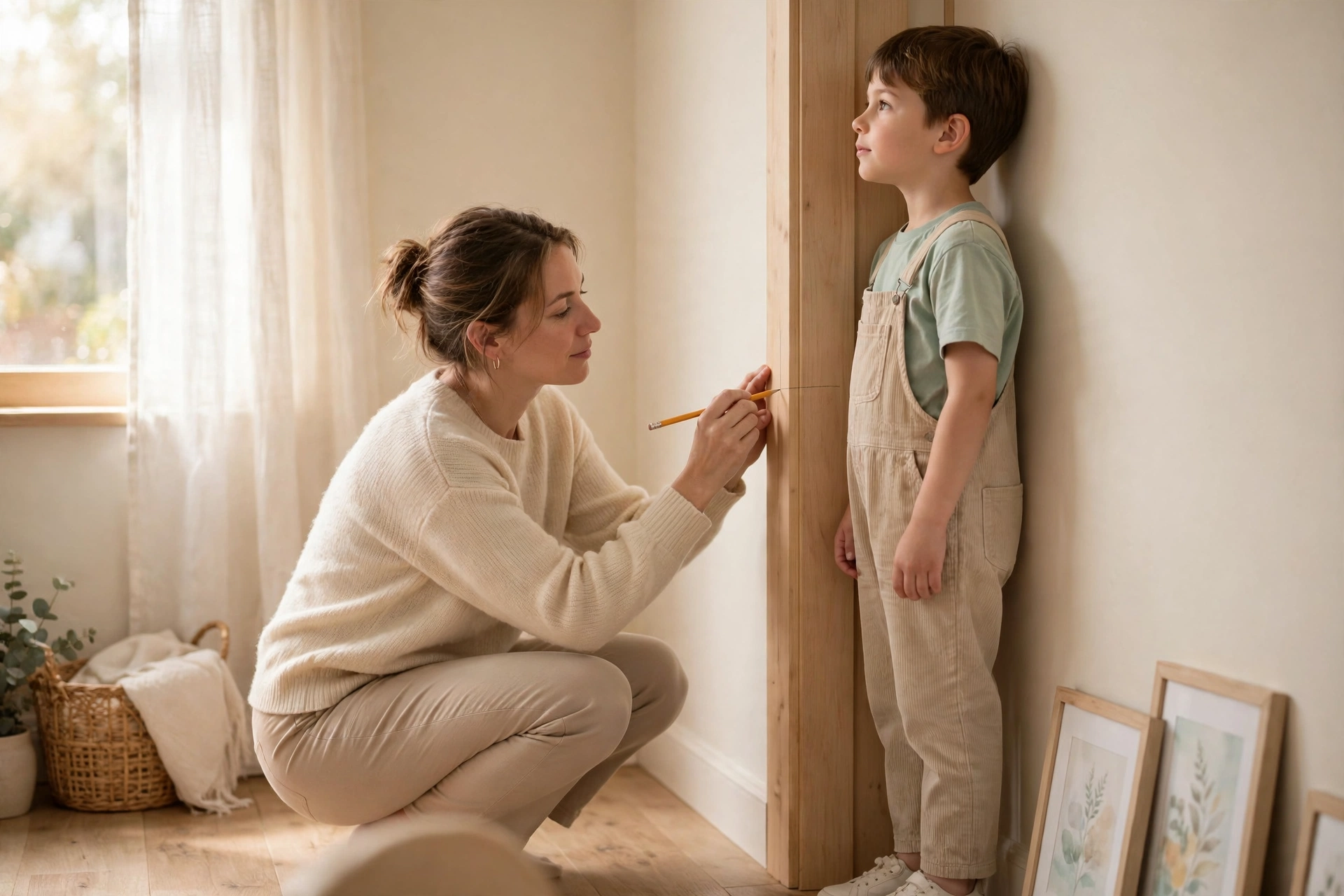
Choose a door frame, or tape a long strip of paper to the wall, and start the family height chart. One at a time, heels to the wall, stand tall; an adult flattens a book on the head and makes the pencil mark, with the name and date beside it. Then read the chart together: who is tallest today? Who comes next? Line the whole family up in height order, tallest to smallest — a wobbly staircase of people. Predict before you measure (“will you pass the teddy’s mark this time?”), and leave the chart up: the day a child’s mark creeps past a sibling’s is a red-letter day. Comparing, ordering and measuring against a mark is early measurement with the highest possible stakes — beating last month’s line.
13. Name-and-match game
Write the family’s names in BIG clear letters, one name per card — MAMA, BABA, DADA, NANA, or whatever your family calls its people — plus your child’s own name, the most important word in the world. Spread the cards out and play: hold one up and ask “whose name is this?” — your child matches it to the right person, photo or portrait figure, and delivers it with a bow. Turn it into a running game: scatter the cards and send your child to fetch “the longest name” or “the name that starts like yours”. Recognising loved people’s names is the friendliest possible start to reading — and the first letter of a child’s own name is usually the first letter they ever learn.
14. Jobs at home — who does what?
Draw or cut out simple picture cards of the jobs that keep a home running: cooking, sweeping, fixing a tap, reading the bedtime story, watering plants, feeding the cat, driving, shopping. Deal them out and sort together: “Who does this in our house?” Some piles will surprise you — talk about the invisible jobs too, the remembering and the organising, kindly and with full credit. Then sort a second way: “jobs for grown-ups” and “jobs I can help with”. Finish by picking one helping job for your child to really do today — laying the spoons, watering one plant, matching the socks. A theme about family should end with the family running a little more kindly than it did on Monday.
15. A bedtime story about OUR family
Close the week where families have always closed the day: with a story — this one starring your own. Begin it together: “Once upon a time, there was a family who lived in a house with a blue door…” and let your child supply the treasure: everyone’s real names, the pet, the favourite place, and one small problem to solve (a lost puppy, a kite in a tree, a surprise visitor). You tell, they interrupt and correct, and tomorrow night they will demand it again — retelling the same story is how children learn how stories work: a beginning, a problem, a fix, a cosy end. Write the best version in a folded-paper book with your child’s drawings, and you have the week’s keepsake: the first book in which your family are the heroes.
Turn it into a theme week
Spread the fifteen across five days, two or three a day, and the theme does the teaching by repetition:
- Day 1 — Meet our family: draw the family portrait (6), count and sort our family (11), and walk like the people we love (5) to get the giggles going.
- Day 2 — Helping hands: the helping-hands relay (3), jobs at home sorting (14) — with one real helping job done for keeps — and the paper people chain (8) hung across the door.
- Day 3 — Making day: the handprint family tree (7) and build our house from boxes (9), with the portrait family moving in by teatime.
- Day 4 — Names and numbers: the name-and-match game (13), the who-is-tallest chart (12), and the wake-up routines game (1) for a movement break.
- Day 5 — Family celebration: the family parade march (2), the family-photo freeze dance (4) — gallery on the fridge — the portrait framed (10), and a bedtime story about OUR family (15) to close the week.
Short on time? Three days still works — pick one activity from each section per day. One thing to hold gently all week: every family looks different. Some children live with grandparents, some with one parent, some with two mums or two dads, some with foster or adoptive parents, some between two homes. On this page, “family” simply means the people who love a child and look after them — and every activity runs on drawings and pretend, so every child can put their own people, exactly as they are, at the centre of the week.
Finish the week with printables
After five days of family play, some preschoolers ask for a page of their own to colour or trace — and that request is the perfect moment for paper. FIMS Schools has free printable preschool and kindergarten worksheets, including first tracing and colouring pages: free preschool and kindergarten worksheets. A family colouring page — or tracing their own name, the week’s favourite word — to close the week is plenty: the play was the learning; the printable is the souvenir.
Read next
- Preschool Theme Activities — every theme week in one place: pick next week’s theme here
- 15 Transport Theme Activities for Preschoolers — last theme week: tape-road cities, ramp races and a cardboard train
- 30 Activities for 4 Year Olds — everyday play ideas for the middle of the preschool years
Family theme questions parents ask
How do I include different kinds of families kindly?
Start from one warm rule: a family is the people who love a child and look after them — and that looks different in every home. Some children live with Mum and Dad, some with one parent, some with grandparents, two mums, two dads, foster carers or adoptive parents, and some split their week between two houses. Say so plainly when it comes up (“families come in all shapes — ours looks like this”), let your child draw and talk about their own people exactly as they are, and never treat any family’s shape as a puzzle to be explained. Pictures and stories that show many kinds of families help every child twice over: they see their own family somewhere, and they learn that their friends’ families are just as ordinary, and just as loved.
What if we have no family photos — or a child in our group has none?
Then drawings carry the week, and they carry it beautifully. Every activity on this page works with the family portrait, the handprint tree and the paper people chain instead of photographs: the count-and-sort game sorts drawings, the name game matches names to drawn people, and the freeze dance makes its own “photos” out of poses. Never make a real photograph the ticket to join in — a child who draws their people is doing the same learning, with the same pride, as a child holding a print. And if you would like photos one day, the freeze-dance gallery on the fridge is a zero-cost place to start.
Can toddlers join a family theme?
Yes — in the toddler way, which is shorter, simpler and closer to the ground. A two-year-old can scribble “their” person on the portrait, carry the soft-toy baby with enormous concentration (two steps counts), freeze — briefly — when the music stops, and hold a shaker at the back of the parade. Pick two or three activities, keep each to a few minutes, and let them wander off and come back as they please. The theme’s big idea — these are my people, and I belong with them — is one toddlers already understand in their bones; the week just gives it pictures, names and a parade.