
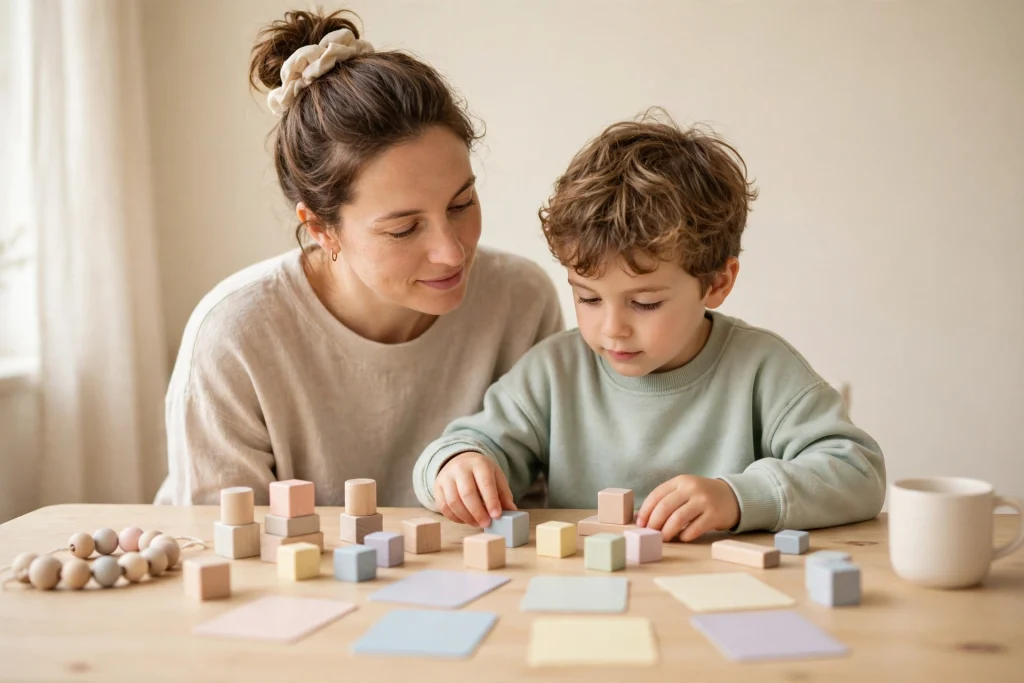
Short answer: a kindergarten homeschool curriculum does not need to be a boxed course. For ages 5–6 it is short, happy lessons in reading, writing and numbers, wrapped inside stories, play and everyday life — and it is free.
Quick facts
- Ages: 5–6 years
- Cost: free — household things plus the library
- Screen-free: mostly — every core idea here works without a screen
- Style: gentle and play-rich, with short lessons
What a kindergarten year actually covers
Kindergarten is the bridge year: your child is leaving pure preschool play behind, but nobody sensible expects a 5 or 6 year old to sit at a desk for hours. There is no single official list of what a kindergarten year must contain — expectations vary from country to country and state to state, and homeschool requirements vary too. But wherever you look, the same five friendly areas appear, and a gentle home plan can cover every one of them.
1. Letters and sounds, growing into first reading. The year usually starts with letter sounds — not just letter names, but the sounds letters make — and blending them into tiny words: c-a-t, cat. By the end of the year many children are reading short, simple books, but the pace is personal: some fly, some warm up slowly, and both are normal. Stories read aloud still do most of the heavy lifting.
2. Writing — a name, then short words. Kindergarten writing begins with writing their own name confidently, moves to labels and captions (“my cat”, “a red bus”), and ends with simple sentences copied or invented. Letter formation matters more than neatness; wobbly letters written willingly beat perfect letters written in tears.
3. Numbers to 100, and first adding and taking away. Counting grows up this year: past ten, past twenty, on towards 100 — usually by counting real things, and later by grouping them in tens. Adding and subtracting start with objects, fingers and stories (“you had 5 grapes, you ate 2…”) long before they become sums on paper.
4. The world — seasons, plants, animals and the body. Kindergarten discovery is close-up science: watching the seasons change, growing a bean, naming body parts and what they do, sorting animals by where they live, noticing weather. Wondering out loud and looking things up together is the curriculum here.
5. Stories, songs and making things. The arts are not a break from learning at this age — they are how learning sticks. Drawing, building, singing, pretending and hearing a story every single day feed the language, memory and imagination that reading and writing are built from.
One practical note: if your area asks homeschoolers to keep any records, keep them simply — a notebook with dates and a line or two about what you did, plus a small folder of drawings, writing attempts and photos of projects. Five minutes a week, and you have a gentle record of the year without turning home into an office. (Requirements genuinely differ by place, so check what your own local rules ask for; this page is general information, not advice about the law.)
The information on this page is general information for parents, shared for learning and activity ideas. It is not medical advice, and it does not replace the guidance of a qualified professional. Every child develops at their own pace — if you have any concern about your child’s development, please talk to a qualified doctor or child-development professional.
A simple weekly rhythm
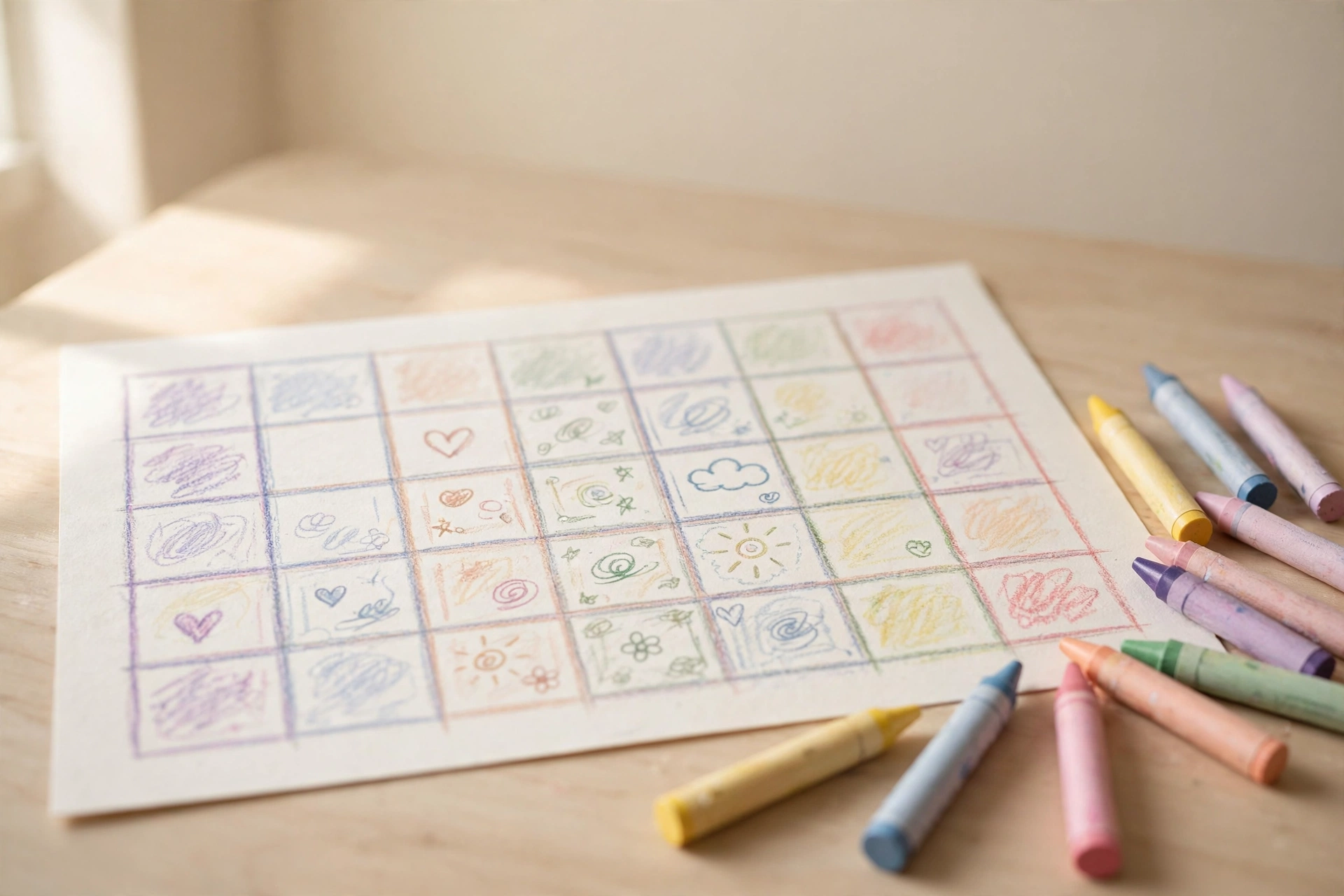
Forget a school timetable with bells. What works at home is a rhythm: the same friendly shape each week, a short focused time each day — often just 15 to 30 minutes of sitting-down learning, split into two smaller bites if that suits your child better — and then the rest of the day filled with play, stories, helping and being outside. Four days a week is plenty for many families; five lighter days suits others. Here is one example week:
- Monday — Reading and sounds. A sound game, a few pages of a first reading book together, and one favourite story read aloud.
- Tuesday — Numbers day. Counting games, grouping objects in tens, and one playful adding or taking-away story with real things.
- Wednesday — Writing and making day. Name practice, a label or caption for a drawing, then a good long making session — drawing, cutting, building.
- Thursday — Discovering the world. A nature walk, a simple kitchen experiment, or a library book about animals, the body or the seasons — and lots of talking about it.
- Friday — Stories, songs and free play. The light day: rhymes and songs, acting out a story, and long unstructured play. (On a four-day week, Friday simply disappears.)
Themes make the rhythm feel fresh without any extra planning: a week of the sea, a week of our bodies, a week of things that grow. Let the library books, the discovery day and the making follow the theme, and the reading and numbers ride along happily inside it. And when a week collapses — illness, visitors, a new baby — drop to stories and play alone for a few days. Kindergarten learning is deep and forgiving; nothing is lost by a gentle week.
Reading and sounds
The heart of the kindergarten year, and the easiest area to keep joyful. Try:
- Sound hunts. Pick a sound — “sss” — and hunt the house and the street for things that start with it: sock, sun, sandwich. Hearing the first sound in a word is the doorway into reading.
- Blend tiny words together. With letter cards, magnetic letters or letters written on paper scraps, build three-letter words and slide the sounds together out loud: m-a-t, mat. Swap one letter and read the new word.
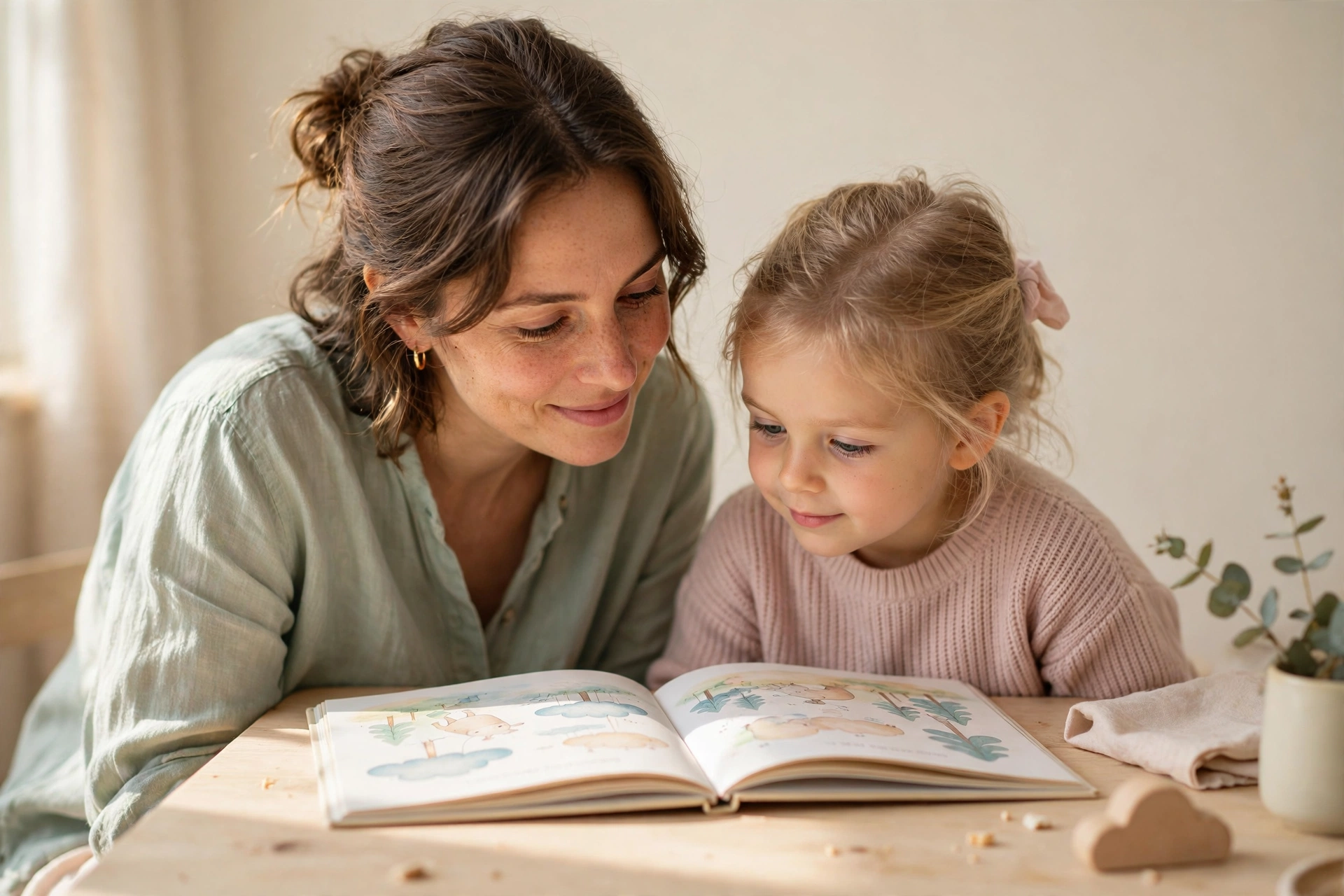
- Two kinds of reading time. Being read to — longer stories now, with chapters — grows vocabulary like nothing else. And reading along: simple first books where your child manages some or most of the words, with your finger ready to help. Ten cosy minutes daily beats an hour of struggle once a week.
- Rhyme everything. Rhyming riddles (“I’m thinking of something that rhymes with fox and you put things in it”), pausing before the rhyming word in a favourite book, and clapping the beats in long funny words. Tuned-in ears make reading click.
Writing
Writing at 5–6 is short, playful and purposeful — real words for real reasons:
- Name first, then labels. Once the name is confident, label the house together: door, bed, cups, cat (the cat may object). Labels your child “wrote” get read dozens of times a day without anyone calling it practice.
- Captions for drawings. Every picture gets a sentence: your child dictates it, writes the words or sounds they know, and you fill the gaps. Over the year, their share of the writing quietly grows.
- Cards, lists and little books. A birthday card with a real message, a shopping list in brave have-a-go spelling, a folded-paper booklet telling a three-part story. Writing somebody will actually read is the best motivation there is.
- Keep tools friendly. Thick pencils, chunky crayons, big paper, short sessions. A few willing minutes most days grow letter formation far better than one long, resisted session.
Numbers and maths
Kindergarten maths is counting with confidence and playing with quantities — almost all of it with real objects:
- Count everything, further. Stairs, steps on a walk, spoonfuls, jumps. Count forwards, count back from 10, start from a number that is not 1. Games with a dice stretch the count without a worksheet in sight.
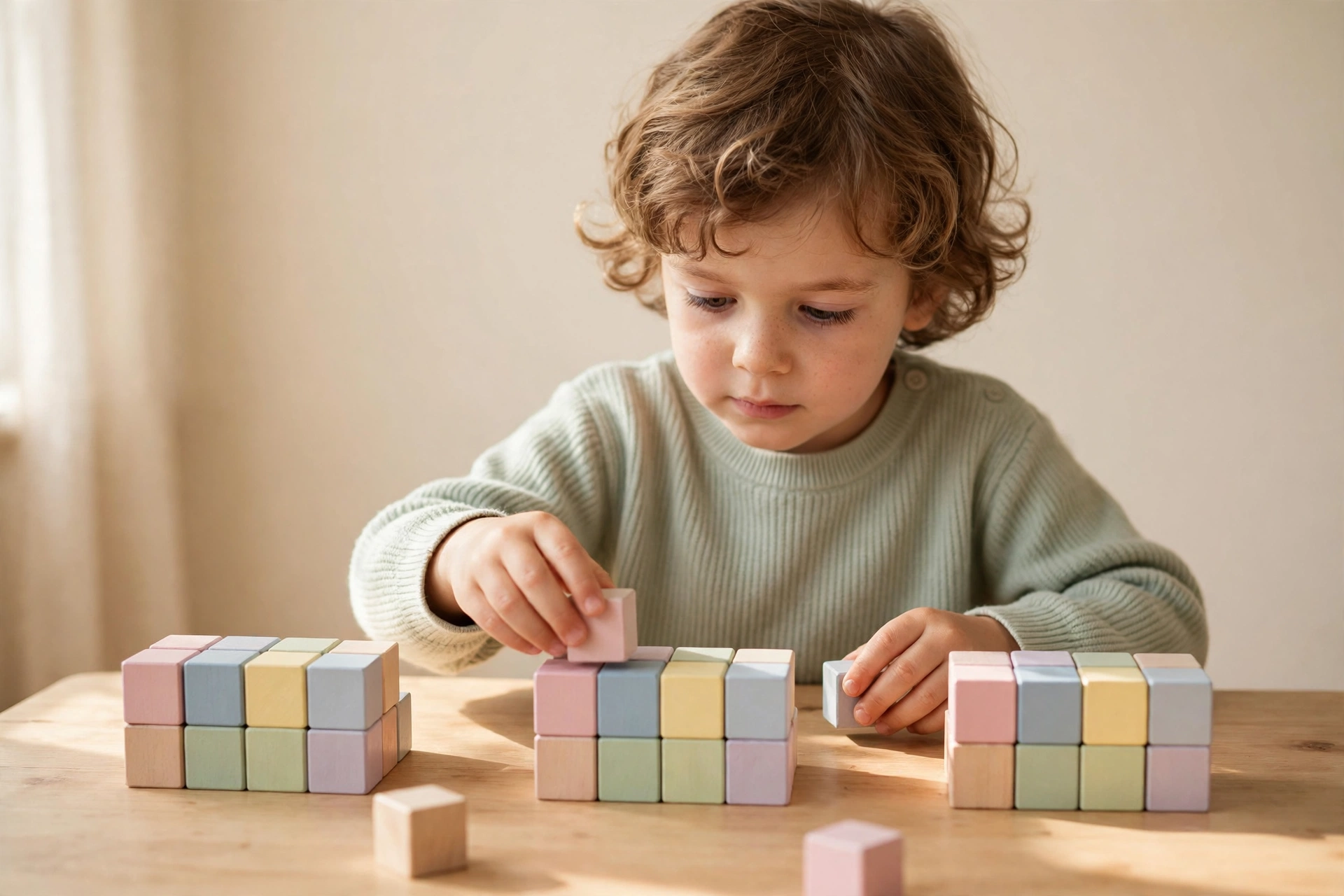
- Tens make 100 friendly. Group ten sticks, ten buttons or ten blocks into a bundle; count the bundles — ten, twenty, thirty — all the way to a hundred. Big numbers stop being scary when you can hold them.
- Adding and taking away with things. “Here are 4 shells. I give you 3 more — how many now?” Act it out, count the pile, then tell the story backwards as things are taken away. Fingers and drawings are legal tools; paper sums can wait until the stories are easy.
- Patterns, shapes and measuring. Continue and invent patterns (red, red, blue…), hunt shapes around the house, compare lengths with string, and pour water or rice between jugs to explore which holds more.
Discovering the world
One walk, one experiment and one good book a week cover this area generously:
- Seasons on repeat. Visit the same tree or patch of park through the year and draw or photograph it each season. Changes your child notices themselves are remembered forever.
- Grow something. A bean on damp cotton wool in a clear jar shows roots and shoots day by day; a pot of herbs on the windowsill gives leaves to count, smell and eventually taste.
- The body, kindly. Name parts and jobs (“your heart is a pump — feel it after running”), brush teeth like a scientist cleaning an experiment, and talk about food, sleep and handwashing as looking after the machine you live in.
- Float, sink, melt, freeze. A bowl of water and a basket of testers; ice cubes racing in sun and shade; a magnet hunt around the kitchen. Guess first, test second, explain third — the whole scientific method, sized for six.
Stories, art and movement
Do not let the “school” areas crowd this one out — it carries the others:
- A story every day. Read aloud daily, retell favourites together, and act them out with toys or dress-up. A child who can tell a story in order — beginning, muddle, ending — is building the exact structure their own writing will need.
- Songs and rhymes with actions. Singing stretches memory, feeds vocabulary and quietly teaches the sound patterns reading is built from.
- Making with a purpose. Drawing real subjects, building challenge cards (a bridge a toy car can cross, a house with a door that opens), painting, cutting and sticking — planning, problem-solving and hand strength in disguise.
- Move every day. Running, climbing, balancing, ball skills and dancing grow the body — and the sitting-still ability school-type learning asks for comes, happily, from plenty of not sitting still.
From play to printables
When your kindergartener starts asking for “real schoolwork”, the FIMS Schools library is ready: free printable preschool and kindergarten worksheets — tracing, letters, numbers, counting and matching pages made for exactly this age. Print one or two pages on writing or numbers day and keep it playful; the worksheets back up the play, they never replace it.
What you do NOT need
Kindergarten is where the homeschool catalogues press hardest, precisely because the year feels official. Most of what they sell, you can skip with a clear conscience:
- An expensive boxed curriculum. Boxes mostly package the five areas above into costly paper and rigid schedules. Your library card, your kitchen table, this rhythm and free printables cover the same ground — at your child’s pace, not a publisher’s.
- Hours at a desk. Long seated lessons are neither needed nor kind at 5–6. Short focused bursts plus a play-rich day teach more, and protect your child’s love of learning — the asset everything else depends on.
- Tests and constant checking. Little quizzes tell you what a quiz measures. Watching your child blend a new word, write a label or count to 60 tells you what is actually growing.
- Toys and apps that promise reading by Christmas. Children learn to read on their own timelines, fed by talk, stories and sound play. No product can hurry that — and feeling “behind” sells products, not progress.
What is worth having: a library card, letter cards or magnetic letters, paper and thick pencils, a hundred things to count (buttons and blocks do nicely), a ball, and time. Almost all of it is already in your house.
Kindergarten homeschool — questions parents ask
How many hours a day does kindergarten homeschool take?
Far fewer than a school day. Most home kindergarteners do well with around 30–60 minutes of focused learning in total, split into short bites — ten minutes of reading play here, fifteen minutes of numbers there — inside a day full of stories, play, helping and fresh air. The play is not time off from the curriculum: at 5–6, play is how the learning sinks in. Two happy, focused half-hours beat three reluctant hours every time.
Do I need to follow a set curriculum?
No. A set curriculum is one way to organise the year, not a requirement of nature. What your child needs is coverage of the five areas above and a loose rhythm that keeps them all in gentle rotation — which is exactly what this page gives you. Some families love the security of a boxed plan, and that is fine too; others find a simple rhythm like this one easier to sustain, cheaper, and kinder to a child whose interests keep changing the plan anyway.
How do I know my child is keeping up?
Watch for growth, not scores. Over the year, most kindergarteners move from knowing some letter sounds to blending little words; from counting to 20 towards counting to 100; from scribble-labels towards written words and captions. Your simple notebook record — dates, a line about what you did, a folder of their writing and drawings — makes that growth visible at a glance. Exact expectations differ by place, and children vary widely and normally, so compare your child with their own last term, not with anyone else’s child. If you ever have a real worry about your child’s progress, their doctor or a qualified teacher can advise far better than an internet checklist.
Read next
- Homeschooling — Simple Ideas for Learning at Home — all our homeschooling guides in one place
- Homeschool Preschool Curriculum — A Free, Simple Plan for Ages 3–5 — the preschool years that come before this one; the same gentle approach for a younger child
- 30 Activities for 5 Year Olds — skipping games, building challenges, first stories and counting to 100, for the play side of the kindergarten year