
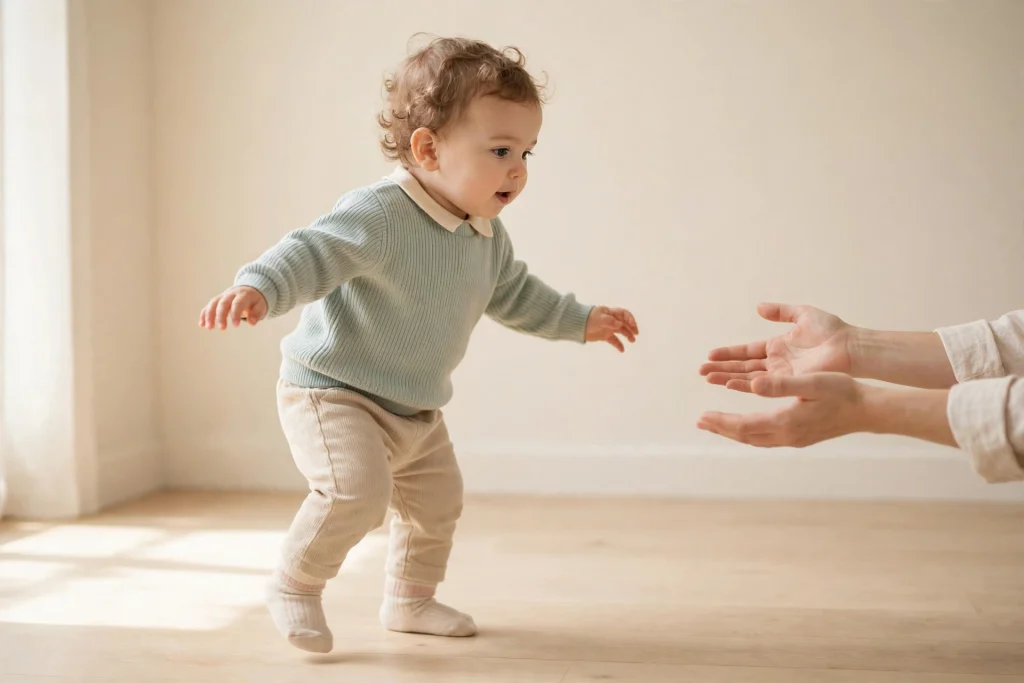
Short answer: What age is a toddler? A toddler is a child between 1 and 3 years old — 12 to 36 months. The name comes from “toddle”: the wobbly, side-to-side walk of a child who has just found their feet.
Quick facts
- Toddler age: 1–3 years (12–36 months)
- Before: infant / baby (0–12 months)
- After: preschooler (3–5 years)
- The name comes from: “toddle” — the wobbly first walk
Where the word toddler comes from
Most stage names in childhood are really just age labels — but “toddler” is different. It is named after something a child does. To toddle is to walk with short, unsteady, side-to-side steps: feet wide apart, arms held up for balance, bottom ready to land at any moment. It is a word people have used for centuries for that particular wobbly walk, and somewhere along the way it became the name for the whole stage of life that walk belongs to.
That is why the toddler stage is best thought of as a stage, not just an age. It begins when a baby stops being mostly carried and starts getting about under their own power — first holding onto the furniture, then letting go. And it ends, roughly, when that same child can walk, run, climb and talk well enough that “little explorer” has quietly turned into “preschooler”. The birthdays — the first and the third — are simply the signposts most of us use for a change that really happens step by wobbly step.
You will meet the word everywhere once your child enters this stage: on clothes rails and shoe boxes (“toddler sizes”), on toy packaging, in nursery and playgroup descriptions. Shops and toymakers use it a little loosely — their ranges often run from about 1 to 4 years — but they all mean the same thing underneath: the small, wobbly, newly independent person who is no longer a baby and not yet a schoolchild.
The toddler years, band by band
Three years is a long time in a small life, and a child of 13 months is a very different creature from one of 35 months. Here is the toddler stage in four bands — not a checklist to measure your child against, just the flavour of each stretch, so you can recognise the country you are travelling through.
12–18 months: the brand-new walker
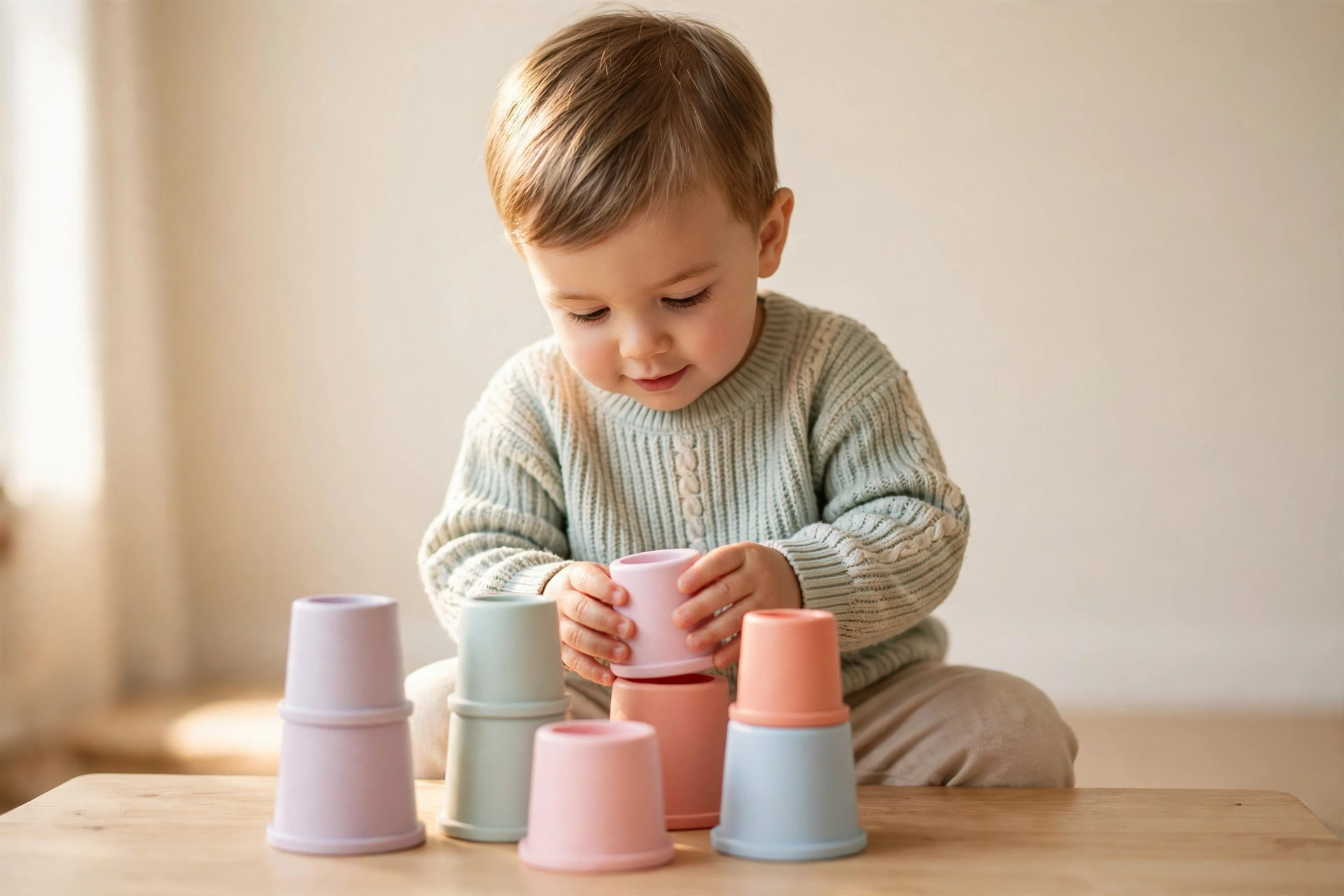
This is the band where the name earns itself. First independent steps turn into real walking, furniture-cruising gives way to toddling across open floor, and everything — everything — is picked up, carried, dropped, tasted and investigated. First words usually appear somewhere in this stretch too, riding along on a flood of pointing and showing. Company is everything: many toddlers this age trail their favourite adult from room to room like a small, determined shadow, and favourite games involve filling things up, emptying them out, and pushing anything that moves. Life is one long expedition conducted at knee height, and your main job is to make the world safe enough to explore. For play ideas matched to the top of this band, see our 24 Activities for 18 Month Olds.
18–24 months: the little independent
Walking firms up into running, climbing and an urgent need to get to wherever is most interesting — usually the one place you would rather they didn’t. Language starts to stretch from single words towards pairs, and a mighty new word arrives: “mine!” This is the band where a child discovers they are a separate person with preferences, and announces it often. Doors must be opened by their hand, cups must be their cup. Copying grown-ups is the other great occupation: sweeping with a broom as tall as they are, stirring an empty bowl with total concentration, wiping a perfectly clean table. It can be exasperating and completely delightful, sometimes within the same minute.
Age 2: the famous year
Two is the toddler year everyone has heard of, and it lives up to its reputation — in the best and hardest ways at once. Feelings are enormous and arrive without warning; “no!” may be the most-used word in the house; and underneath the storms, something wonderful is happening: sentences are forming, pretend play is switching on, and your child is practising being a person in public. Two-year-olds want to do everything themselves and still need you right there while they do it. Words multiply quickly in this year as well — a teddy may be fed, scolded and put to bed in full sentences of a sort — and bedtime can turn into a long and creative negotiation. That push-and-pull is not a problem to fix — it is the age. Our 30 Activities for 2 Year Olds are built for exactly this energy.
Age 3: the conversationalist
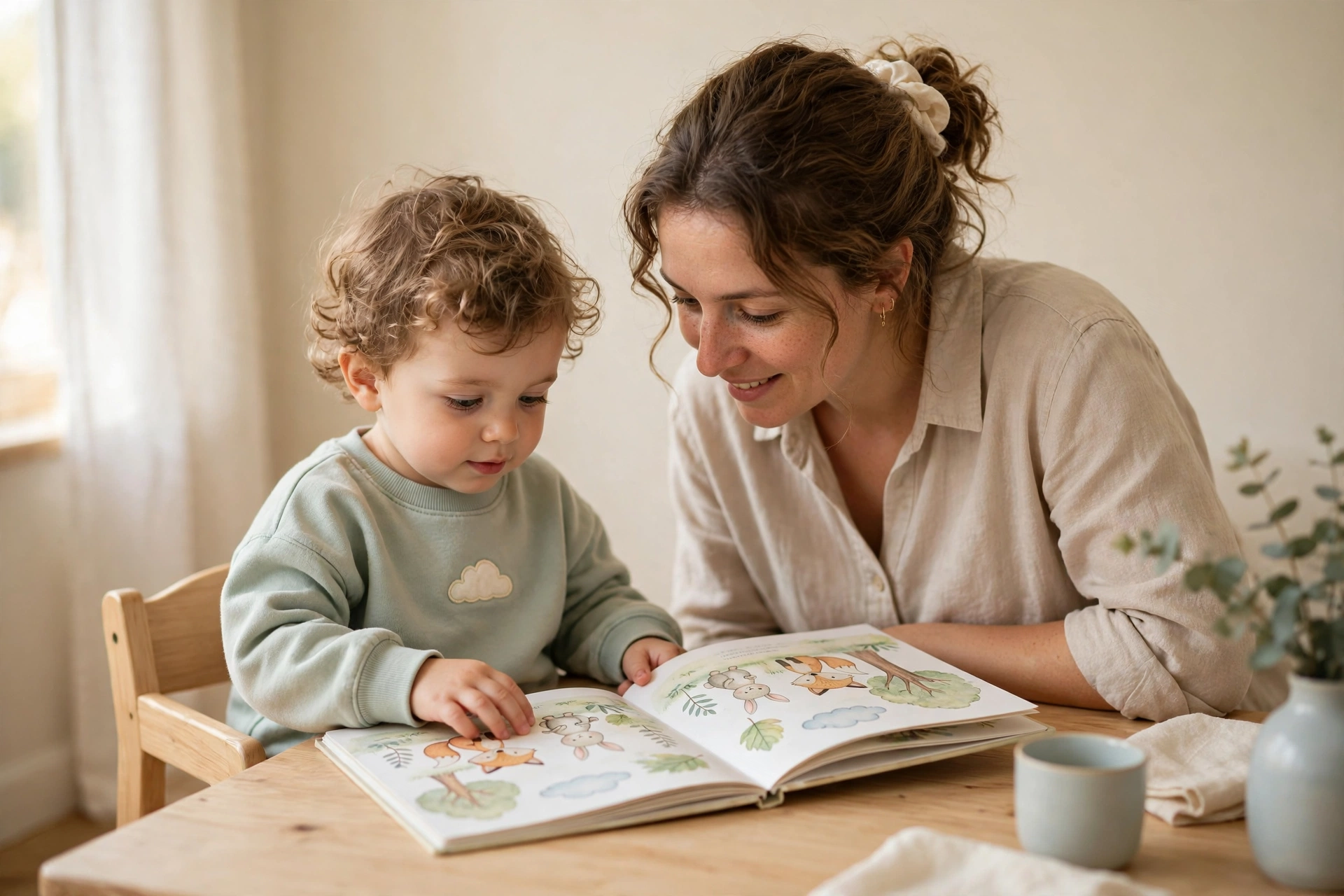
By three, the toddle is long gone. Your child walks, runs, climbs and chats — real conversations now, with questions arriving in an endless, wonderful stream: why, what, who, where? Pretend play grows stories and characters, other children become genuinely interesting — first friendships, favourite playmates, favourite games with actual rules — and dressing themselves, however back-to-front the jumper ends up, becomes a point of pride. The fierce independence of two softens into something more cooperative. Somewhere around the third birthday the toddler stage hands over to the preschool years, though nobody could point to the exact day. For the far side of the handover, try our 30 Activities for 3 Year Olds.
The information on this page is general information for parents, shared for learning and activity ideas. It is not medical advice, and it does not replace the guidance of a qualified professional. Every child develops at their own pace — if you have any concern about your child’s development, please talk to a qualified doctor or child-development professional.
Toddler, baby or preschooler?
The three labels of the under-five years sit side by side like this:
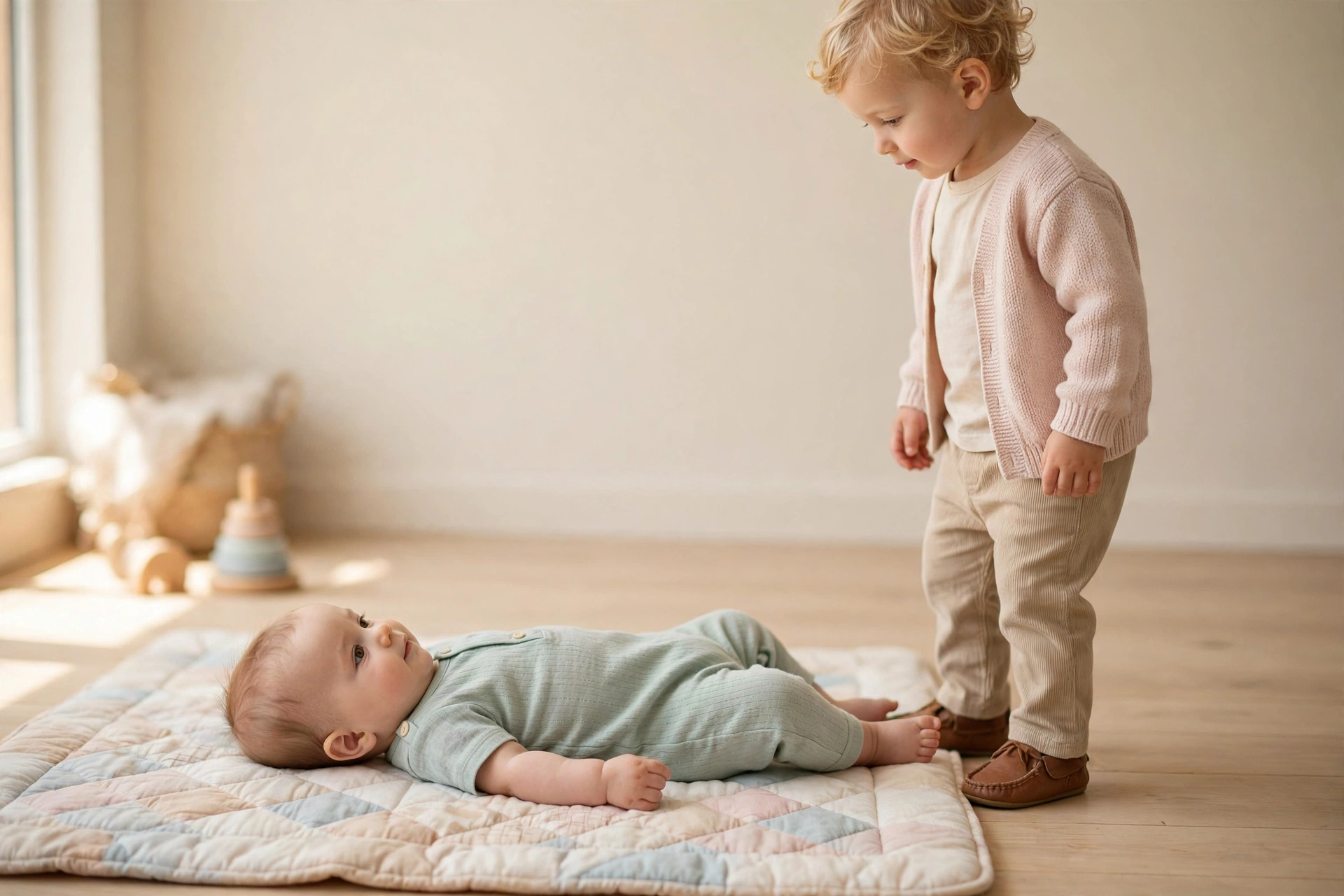
Baby / infant — 0 to 12 months. The first year: a baby is carried, fed and comforted through almost everything, and gradually builds towards sitting, crawling, standing and those first steps and first words. Right at the doorway between baby and toddler sit the one-year-olds — if your child is hovering around that first birthday, our 25 Activities for 1 Year Olds are written for exactly that in-between moment.
Toddler — 1 to 3 years. The walking, toddling, exploring stage described on this page: moving independently, language growing from first words to sentences, and a personality arriving in full. Toddlers do things themselves in short, determined bursts — and still need a grown-up close by for nearly everything.
Preschooler — 3 to 5 years. The stage after toddler: steadier on their feet, chattier, more able to play with other children rather than just alongside them, and slowly getting ready — in the widest, gentlest sense — for school. Many children are in a preschool or nursery setting during these years, which is where the name comes from.
One honest note before you treat these lines as exact: different books and websites draw them slightly differently. Some say the toddler stage ends at 2; most say 3. Both are describing the same rolling change. Stages overlap, children develop at their own pace, and no child wakes up on a birthday as a different kind of person. The labels are guides to help parents find the right ideas and expectations — not boxes a child must fit.
So why do parents ask this question at all? Usually for very practical reasons: to find activities that fit, clothes that fit, a playgroup or nursery class with the right name, or simply to know whether the stage their child is in has a name and an end in sight. For all of those purposes, “1 to 3 years, the toddling years” is the answer to carry with you — and when a child sits near a boundary, the stage descriptions above will tell you more than the birthday will.
Toddler age — questions parents ask
What age is a toddler?
A toddler is a child from 1 to 3 years old — 12 to 36 months. The stage starts around the first birthday, when a baby begins walking (toddling) and making first words, and it runs until about the third birthday, when the preschooler stage takes over. If you remember one thing, make it this: toddler = the walking, exploring, early-talking years between baby and preschooler.
Is a 2 year old a toddler?
Yes — completely. A 2 year old is not just a toddler, they are the toddler in the middle of the stage: walking and climbing confidently, putting words together, insisting on doing things alone, and having very big feelings about all of it. If someone describes a child as a “classic toddler”, they are almost certainly picturing a 2 year old.
What comes after toddler?
After the toddler stage (1–3 years) comes the preschooler stage, from about 3 to 5 years: more coordinated, more talkative, more social, and gradually getting ready for school. After preschooler comes the school-age child, from around 5 or 6. Each label is really just a shorthand for what a child at that stage spends most of their day doing — babies are cared for, toddlers explore, preschoolers play and prepare, school children learn in a classroom.
Is a 4 year old a toddler? And what is a pre-toddler?
No — a 4 year old is a preschooler, not a toddler, however small and cuddly they still seem at bedtime. “Pre-toddler” is something different: an informal nickname you may see in parenting writing for babies of roughly 9 to 15 months who are on the verge of toddling — crawling fast, pulling up, cruising the furniture — but it is not an official stage name, just a handy label for that almost-walking stretch.
Read next
- Child Development — a Gentle Guide for Parents — the rest of our development series for the 0–5 years
- When Do Babies Say Their First Word? — the babble-to-first-word journey, explained gently
- Montessori for Toddlers: Simple Ideas to Try at Home — calm, practical ways to set up your home for the toddler stage