
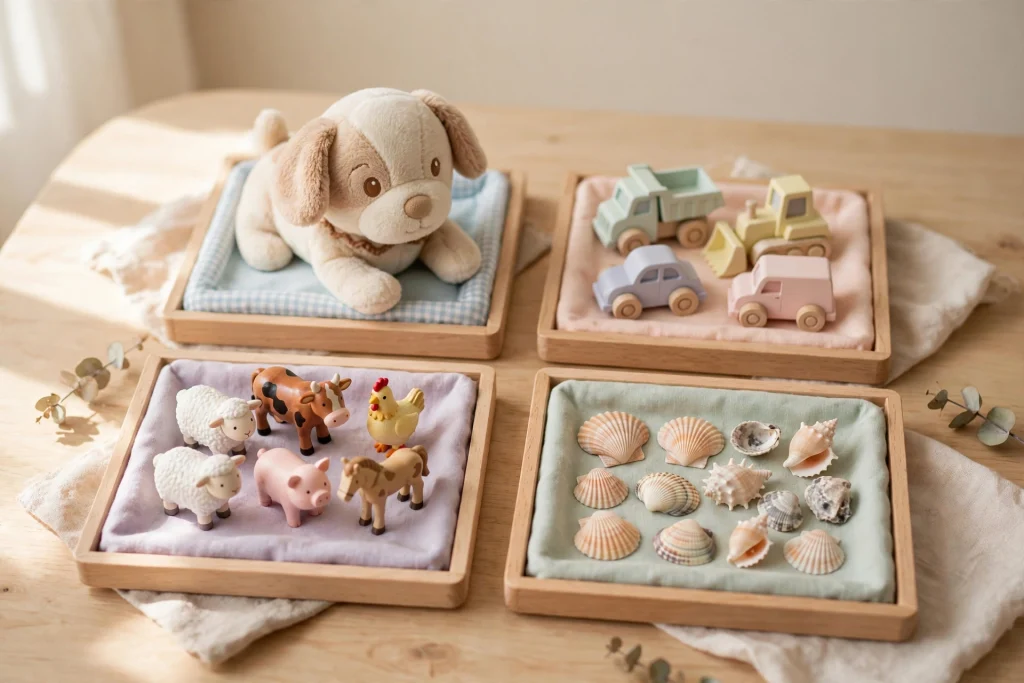
Short answer: Preschool theme activities are built on theme weeks: one topic — pets, the farm, the ocean — explored through play, crafts, stories and games for a few days. This page collects every FIMS theme week for ages 3–5, ready to dip into.
Quick facts
- Ages: 3–5 years
- One theme: 3–7 days of play
- Cost: free — ordinary household things
- New themes: added through the year
Why theme weeks work
Young children learn best by going deep, not by skimming. When the whole week circles around one world — the farm, say — every activity connects to the last one: the story about a farmer makes sense of the animal game, the animal game makes the craft more fun, and the craft gives your child something to talk about at bedtime. Nothing has to be re-explained, so play gets longer and richer as the week goes on.
Themes are also a gift for vocabulary. A child who spends a week with the ocean meets words like wave, shell, tide, fin and deep again and again, in stories, songs and play — and words met ten times in real play are words that stay. The same is true for numbers, colours and shapes: counting farm animals or sorting shells teaches the same skills as any worksheet, inside a world the child actually cares about.
And theme weeks make life easier for you. Instead of inventing something new every morning, you plan once: one small list of household things to gather, a story or two, and a handful of activities to choose from across the week. If a day goes sideways — they all do, sometimes — the theme simply carries on tomorrow. There is no timetable to fall behind on.
How to use a theme page
Every FIMS theme page follows the same simple shape, so once you have used one, you know them all. Each theme has 15 activities in three kinds: Move (active games and whole-body play), Make (crafts, cooking and things to build) and Learn (letters, numbers, stories and thinking games). Most use things you already have at home, and each one says what you need, how long it takes and how much mess to expect.
You do not need to do all 15. Pick two or three a day, spread across the kinds — something active in the morning, something to make after lunch, a story game before bed — and a theme comfortably fills three to seven days. Repeat favourites freely: repetition is not cheating, it is how preschoolers master things. A good way to end a theme week is to let your child choose the one activity they loved most and do it one last time.
Some theme pages end with a gentle bridge to free printable worksheets that match the theme — animal tracing for the farm week, for example. Those are always optional extras for children who ask for “real school work”, never homework. The play is the point; the printable is a souvenir.
Choosing your first theme
Start with whatever your child is already obsessed with. If every walk becomes a hunt for cats and dogs, begin with the Pet Theme. If your child presses their nose to the window for every passing bus, start with Transport. A theme that begins from a child’s own interest needs no warming up — they arrive at it full of questions, and questions are the fuel of the whole week.
If nothing has captured them yet, pets and transport are the friendliest first themes for most 3–5 year olds: the toys are already in the house, the sounds and movements are fun to copy, and the pretend play starts itself. Save the bigger, more distant worlds — Space is the classic example — for when your child has a few theme weeks behind them and the routine feels familiar. And if a theme flops? Swap it, guilt-free. The next theme is right below, and trying things out is exactly what this page is for.
Our first themes



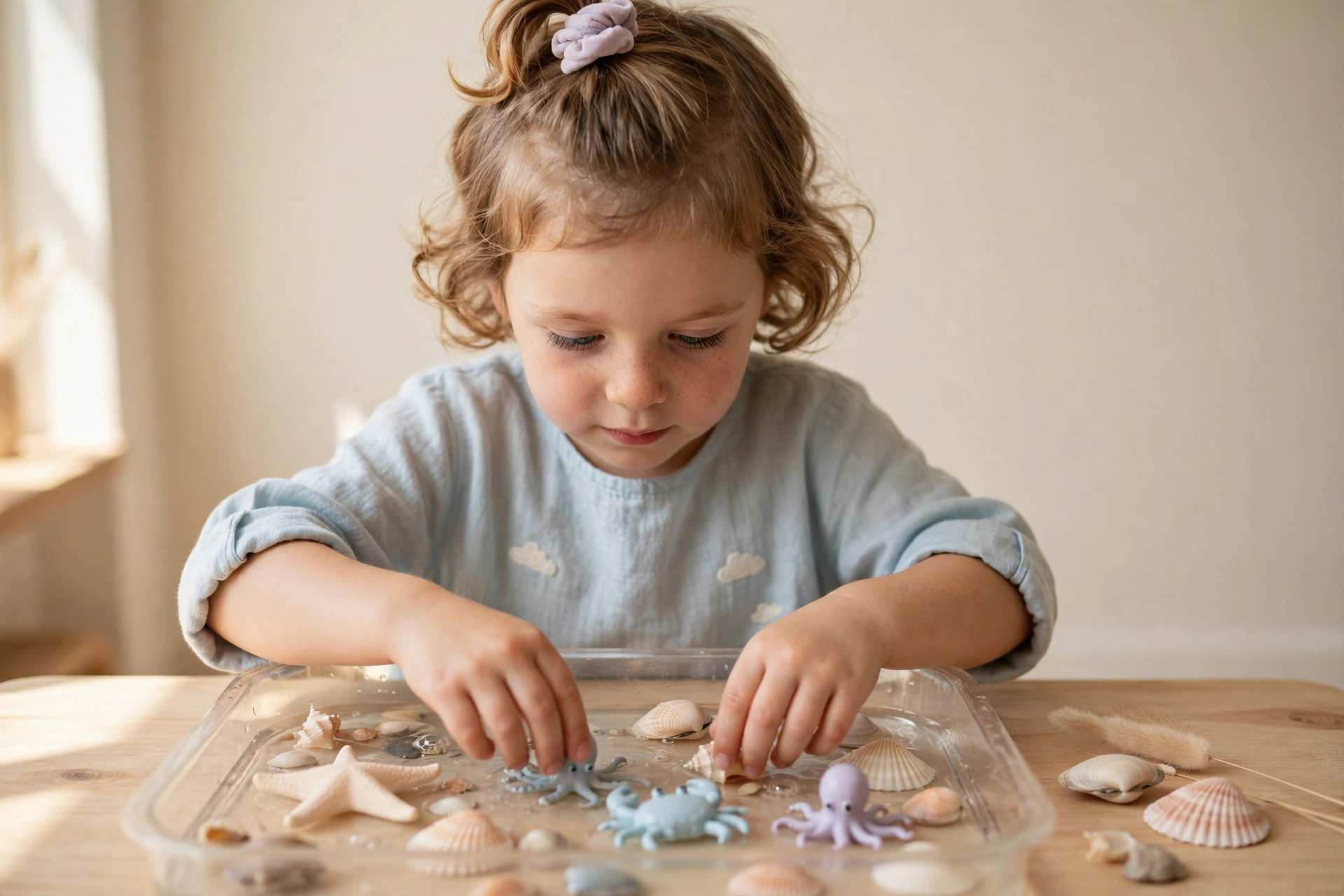
Coming through the year
Eight more theme weeks join these through the year: Family (the people we love and the homes we share), Space (the moon, stars and rockets), Beach (sand, sun and seaside games), Camping (tents, torches and pretend campfires), Spring (growing things and new life), Autumn (falling leaves and harvest colours), Fall (cosy days and seasonal change), and Winter (cold weather, warm clothes and indoor play). Each new theme will appear on this page as it is published, so this is the page to bookmark and come back to.
Read next
- More play ideas by kind: Activities by Type
- Homeschool Preschool Curriculum — theme weeks fit beautifully inside a gentle weekly plan
- 25 Math Activities for Preschoolers — counting, shapes and patterns to weave into any theme
Theme week questions parents ask
What is a preschool theme?
A preschool theme is one topic — pets, the farm, the ocean — that ties several days of play together. Instead of unrelated activities, everything connects: the stories, crafts, games and songs all explore the same little world. Themes come from how young children actually learn: deeply, through repetition, and by linking new ideas to things they already know and love.
How long should a theme week last?
As long as your child is interested — usually three to seven days. Some themes (transport, for many children) could happily run for a fortnight; others are done in three days, and that is fine too. Let interest be the clock: when the questions stop and the play moves on, pick the next theme. There is no schedule to keep and nothing to finish.
Do I need special supplies for theme weeks?
No. Every FIMS theme week is built from ordinary household things — cardboard boxes, cushions, kitchen items, paper, crayons and the toys you already own. Each activity lists what you need before you start, and most need nothing bought at all. If you gather one small box of bits at the start of the week (the theme page tells you what), you are set until the theme ends.