
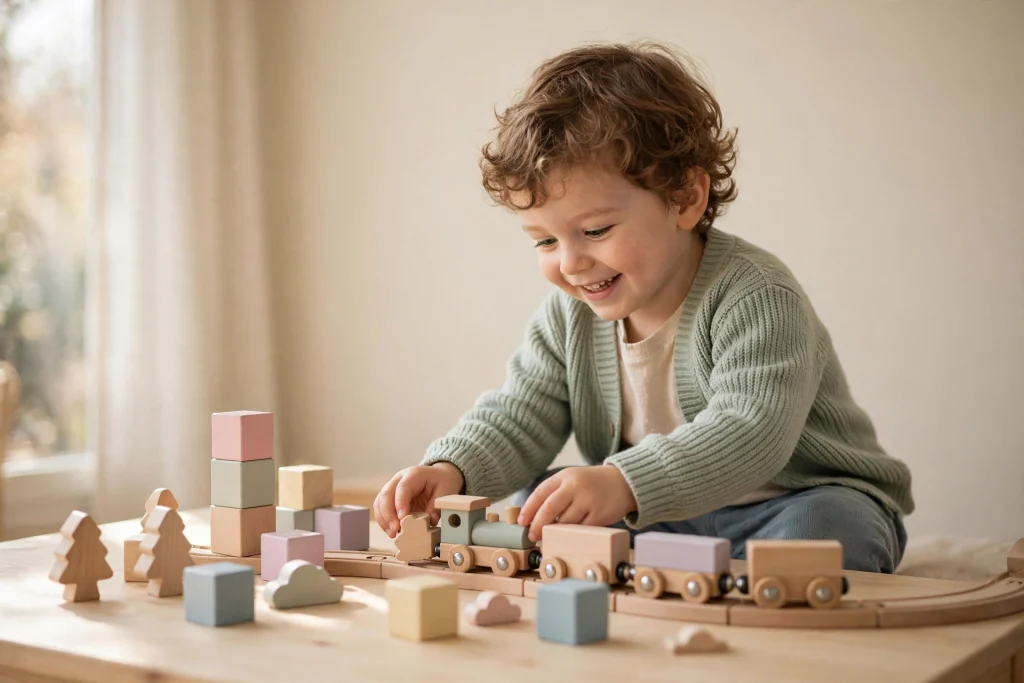
Short answer: The best activities for 3 year olds are the ones they can do themselves — balancing, pedalling, cutting, counting and endless pretend play. These 30 activities use household things, cost nothing, and build the exact skills your three year old is working on right now.
Quick facts
- Age: 3 years
- Prep: mostly none — a few take two minutes to set up
- Cost: free, or ordinary household items
- Screen-free: yes — every activity on this page
- Supervision: an adult nearby at all times (see the safety notes in the activities)
What your 3 year old is learning
Three is the year of “I do it myself”. Most 3 year olds are running and jumping with real confidence now, learning to pedal a tricycle, and climbing higher than you’d like. Talk has taken off: proper sentences, a stream of questions, and favourite phrases repeated all day. Pretend play is in full swing — shops, doctors, cooking, superheroes — and other children are becoming genuinely interesting, so first friendships (and first squabbles over toys) appear. Attention lasts a little longer at three, simple rules start to make sense, and your child wants to help, choose and do things in their own way. The activities below are built for exactly this stage.
The information on this page is general information for parents, shared for learning and activity ideas. It is not medical advice, and it does not replace the guidance of a qualified professional. Every child develops at their own pace — if you have any concern about your child’s development, please talk to a qualified doctor or child-development professional.
Run, jump and balance — active play for 3 year olds
1. Tape-line balance beam
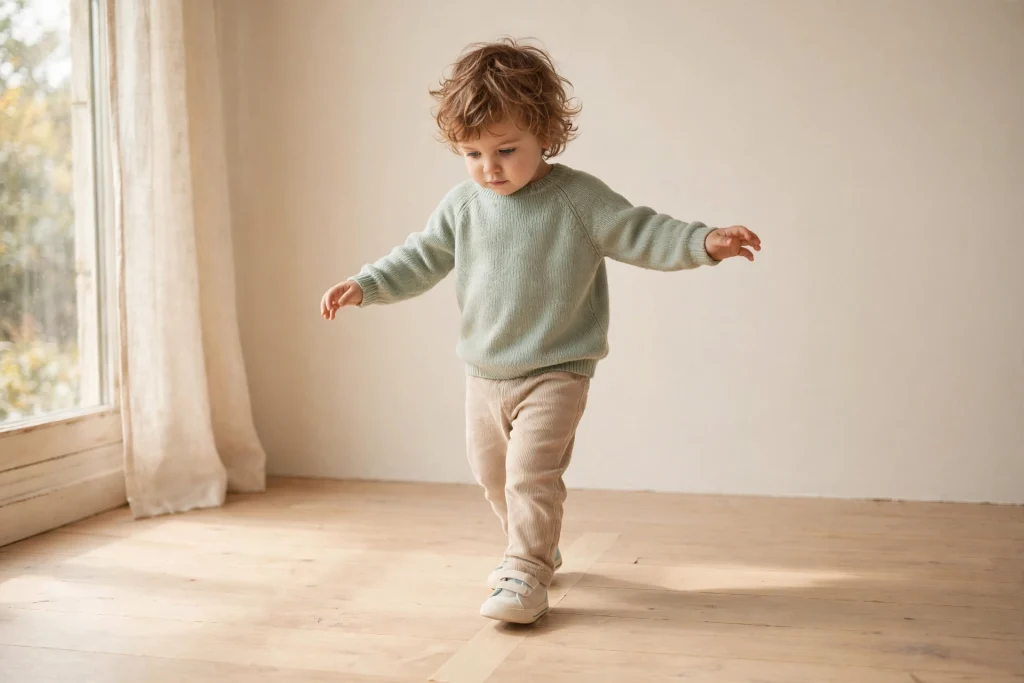
Stick a long line of masking tape along the floor — straight at first, then zigzag or curved. Your 3 year old walks it heel-to-toe, arms out like a tightrope walker, then tries it carrying a teddy or walking backwards. Balancing on a line builds the body control that playgrounds and PE lessons will ask for.
2. Full-room obstacle course
Chain five or six challenges together: over the cushions, under the table, around the chair, through the blanket tunnel, finish with three star jumps. Time it with a big countdown cheer, then change one thing and go again. At three, remembering a longer sequence is real brain work — and beating “their record” never gets old.
3. Chalk hopscotch, first version
Outside, chalk five big squares in a row and number them 1 to 5 (or tape paper squares indoors). Your child jumps square to square while you call the numbers, then tries jumping only on the number you shout. It’s counting, jumping and listening in one game — and a gentle first taste of hopscotch rules.
4. Beanbag target throw
Make three targets — a bucket, a hoop of tape on the floor, a cardboard box — worth cheering at different distances, and throw beanbags or rolled socks at them together. At three, aiming at a mark (not just throwing) is the new skill. Counting how many landed in is early maths sneaking in.
5. Pedal-power cone course
Set out plastic bottles or cushions as slalom markers in the garden, on the drive or down a hallway, and let your 3 year old weave between them on a tricycle or balance bike. Steering while pedalling is a whole-body puzzle at this age. Keep it on flat, safe ground away from any road, and a helmet is a good habit from the start.
6. Follow the leader
Take turns being the leader: march, hop, tiptoe, spin, stomp, freeze. Your child copies your moves — then leads, and you must copy theirs, however silly. Copying builds body awareness and memory; leading builds confidence. This one burns serious energy in a very small space.
7. Lily-pad leaping
Lay paper or foam “lily pads” across the floor with gaps between them — the floor in between is the pond. Your little frog leaps from pad to pad; if a foot lands in the “water”, they climb back to the bank and start again. Judging distance, jumping with both feet and landing steady are exactly the skills three year olds are wiring up.
8. Balloon keep-up
One balloon, one rule: don’t let it touch the floor. Bat it back and forth together, counting your hits out loud. A balloon moves slowly enough for a 3 year old to track, reach and plan a hit — proper hand–eye coordination practice disguised as pure excitement. Clear the floor of anything breakable first, and put popped balloon pieces straight in the bin.
9. Stepping-stone river
Scatter cushions, sturdy books or paper stones across the room and challenge your child to cross the “river” without wet feet. Start with the stones close together and spread them a little further each round. Planning a route, judging gaps and steadying on wobbly cushions is balance and problem-solving in one adventure.
10. Roll and move dice game
Write or draw six big actions on a cardboard dice (or on cards to draw from a hat): jump, spin, clap, stomp, hop, freeze. Roll, shout it out, everyone does it. At three, linking a symbol to an action and waiting for a turn are early game skills — and this one reliably ends in laughter.
Make and imagine — craft, art and pretend play
11. Glue-and-stick shape pictures
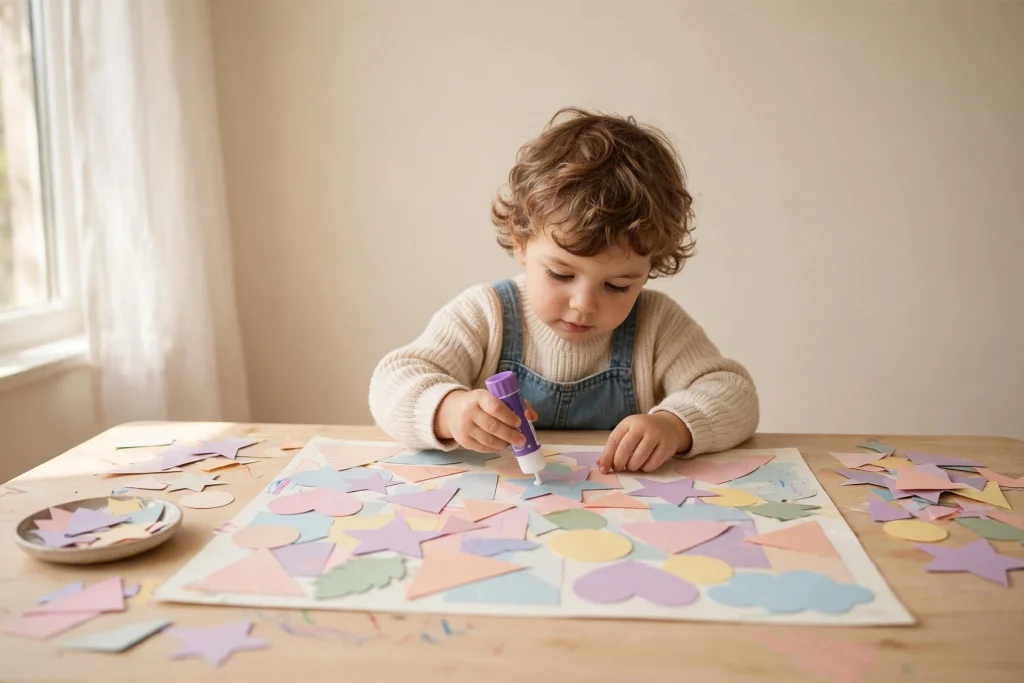
Give your 3 year old a glue stick, a big sheet of paper and a pile of pre-cut shapes, fabric scraps and magazine pictures. This year they can spread the glue themselves and decide where everything goes — a house, a face, or glorious abstract chaos. Choosing, gluing and pressing builds hand strength and early design sense.
12. Playdough bakery
Set up a pretend bakery: playdough, a rolling pin, cookie cutters, cupcake cases and a tray. Your child rolls, cuts and “bakes” cakes, then sells them to you at the shop counter. Shaping dough strengthens fingers, and the buying-and-selling script grows language and social play. Our no-cook playdough recipe makes a fresh batch in ten minutes.
13. Sticker scene stories
Upgrade plain sticker play: draw a simple background on a big sheet — a road, a garden, the sea — and let your child place big stickers to make a scene, then tell you the story of what’s happening. Peeling stickers is fine-finger work; narrating the scene is early storytelling. Expect the story to change completely halfway through. That’s the good part.
14. Cardboard box world
A big cardboard box becomes a house, a shop, a car, a boat. Cut a door and windows yourself, then hand over crayons and stickers for decorating, and a cushion for furniture. Imaginative play like this is where 3 year olds practise real life — conversations, roles, problems and solutions — in complete safety.
15. Dressing-up box adventures
Keep a box of hats, scarves, old shirts, bags and safe props. One minute a doctor, the next a shopkeeper or a superhero posting letters. Dressing up drives the pretend play three year olds are built for, and buttons, bags and hats are dressing-skills practice too. A mirror at their height doubles the drama.
16. Nature treasure collage
Go on a collecting walk with a small bag: fallen leaves, petals, feathers, interesting sticks. Back home, glue the treasures onto thick paper or card to make a picture. Talking about what each thing is, where it came from and how it feels mixes nature learning, words and craft — and every walk becomes a supply run.
17. Sponge-print pictures
Cut kitchen sponges into simple shapes — square, triangle, circle, star — dip them in washable paint on a plate, and print patterns and pictures on big paper. Gripping, pressing and lifting a sponge is great hand work, and printing the same shape over and over is a first feel for patterns. Aprons on; this one is joyful, not tidy.
18. Junk modelling workshop
Save clean boxes, tubes, yoghurt pots and lids, and build with tape and glue: a robot, a garage, a rocket. At three, the plan changes mid-build and that’s fine — sticking, stacking and fixing things that fall down is real early engineering. Keep a “workshop box” topped up and rainy afternoons get much easier.
19. Sock puppet theatre
Make two simple sock puppets — drawn-on faces are plenty — and hide behind the sofa for a show. Puppets let shy children talk, bold children perform, and everyone practise conversation: questions, answers, silly voices. Retelling a favourite story with puppets is early literacy wearing a costume.
20. Water painting outside
On a dry day, give your child a bucket of water and a big brush and let them “paint” the patio, fence or pavement. Strokes appear, then vanish in the sun — so they paint again. Big arm movements build shoulder strength for writing later, and there is genuinely nothing to clean up. Works on any washable surface, indoors on a tray at a push.
First learning — letters, numbers and doing it myself
21. First scissors — snipping practice
Start with playdough “sausages”: your child snips them into pieces with child-safe scissors, then moves to snipping the fringe of a paper strip. Safety first, always: scissors only while sitting at the table, an adult right beside them, blades pointing away from the body, and scissors put away the moment the activity ends. Short, supervised snips build the hand control that cutting along lines will need later.
22. Name tracing in a salt tray
Sprinkle a thin layer of salt or sand in a shallow tray and write the first letter of your child’s name in it with your finger — or their whole name, letter by letter, if they’re eager. They copy over it, shake the tray flat, and start again. Tracing with a finger gives letter shapes without any pencil pressure, and their own name is the word they care about most.
23. Count and fetch game
“Can you bring me four spoons?” Send your 3 year old on counting missions: three teddies for the picnic, five blocks for the tower, two shoes for mum. Counting real objects they have to touch and carry is how numbers to 10 become real at this age. If the count wobbles, count together as the objects land in a row.
24. First turn-taking board games
Try a simple picture lotto or matching-pairs game — or make one: six pairs of identical picture cards, face down, turn two over at a time. At three, keep games short, celebrate every match, and don’t worry about who “wins”. Waiting for a turn, remembering where a card was and following one simple rule is a huge learning package in ten minutes.
25. Shape and colour hunt
Call a mission: “Find me something round!” or “Find me three blue things!” Your child searches the room and brings back the treasure; then swap — they call, you hunt. Hunting by one or two features sharpens noticing skills, the same eyes they’ll later use to tell b from d. Kitchen objects are the easiest wins.
26. Sorting with two rules
Level up sorting: first sort the blocks by colour, then clear and sort the same blocks by size — big ones here, little ones there. At three, sorting by one rule, then switching to a different rule, is genuinely advanced thinking. Talk through it out loud: “All the red ones… now all the BIG ones.”
27. Pattern threading
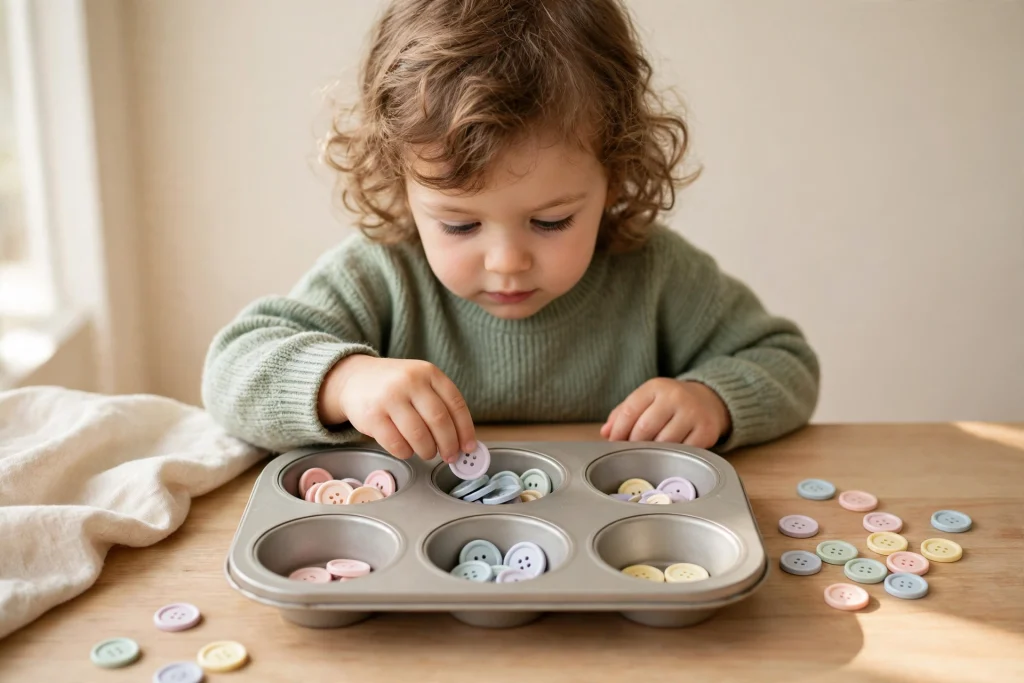
Thread big beads, buttons or pasta tubes onto a lace or pipe cleaner in a pattern — red, blue, red, blue — and let your child continue it, then start their own. Patterns are the roots of maths, and threading is quiet fine-motor gold. Keep pieces large, play at the table where you can see everything, and put small pieces away afterwards.
28. First interlocking puzzles
Move on from knob puzzles to simple interlocking jigsaws — six to twelve big pieces with a picture your child loves. Do the edges together, name what’s missing, and let them push the pieces home. Fitting a piece means turning it, testing it and reasoning about shapes — proper problem-solving, sized for three.
29. Dressing myself practice board
Practise the “I do it myself” skills off the clock: big buttons on a cardigan, a zip on a jacket, velcro shoes, socks pulled up. The famous coat trick — coat on the floor, arms in, flip it over the head — delights every 3 year old. Ten calm practice minutes now save twenty rushed ones on a busy morning.
30. Tell the story back
After a favourite picture book, close it and ask: “What happened first? Then what?” — or lay three simple picture cards in order and let your child arrange and retell the story. Retelling in sequence is early reading comprehension, and three year olds love showing off what they remember. Prompt gently and let their version wander; the telling is the learning.
A look ahead
All this snipping, threading, tracing in salt and pattern play is quietly getting little hands and eyes ready for pencils. When your 3 year old starts showing interest in “real” writing, FIMS Schools has free printable preschool and kindergarten worksheets — first tracing lines, shapes and letter pages made for exactly this stage: free preschool and kindergarten worksheets. For when they’re ready — a few minutes at a time is plenty.
Read next
- Activities by Age — activity ideas for every age, from babies to 5 year olds
- 30 Activities for 2 Year Olds — the stage just before this one, handy if you have a younger toddler too
- Rainy Day Activities for Kids — indoor ideas for the days nobody can go outside
Activities for 3 year olds — questions parents ask
What should a 3 year old be learning?
Mostly through play: talking in sentences and asking questions, counting real things up to about 10, recognising some colours and shapes, knowing their own name (and maybe its first letter), and practical skills like dressing, pouring and using scissors with help. There is no syllabus at three — the activities on this page cover all of it inside ordinary play.
How do I keep a 3 year old busy at home?
Rotate, don’t accumulate: a short active game, something to make, then a quieter learning game works better than one long activity. Set up little invitations — the obstacle course already built, the craft box open on the table — so play can start without you staging everything. And let your 3 year old “help” with real jobs; at this age, helping is a top-tier activity.
What are good activities for a 3 year old who won’t sit still?
You’re not alone — most 3 year olds are built to move. Start with Section 1: obstacle courses, lily-pad leaping, balloon keep-up and follow the leader all burn energy properly. Then ride the calm that follows into a table activity. Short bursts with movement breaks between them beat any battle to sit still, and heavy work like pushing and carrying settles busy bodies best.
How long should a 3 year old play with one activity?
Ten to twenty minutes on one thing is a good stretch at three, and five busy minutes still counts. Attention grows in small steps across this year. If interest fades, change one element — a new rule, a new material, a new role for teddy — rather than pushing on. Coming back to the same favourite game day after day is how three year olds master it.